








































Get Indexology® Blog updates via email.

In This List

S&P High Yield Dividend Aristocrats Welcomes 18 New Members in the Latest Reconstitution

S&P 500 Dividend Aristocrats Rebalance: Erie Indemnity Company, Eversource Energy and FactSet Research Systems Are the Latest Additions

Locally Sourced but Globally Minded

From Cocoa to Gold: The S&P GSCI's Top Performers in 2024 and Seasonal Trends in 2025

Uncovering Companies' Climate Resilience

S&P High Yield Dividend Aristocrats Welcomes 18 New Members in the Latest Reconstitution

Contributor Image
Wenli Bill Hao

Director, Factors and Dividends Indices, Product Management and Development

S&P Dow Jones Indices

The S&P High Yield Dividend Aristocrats® (S&P HYDA) includes large-, mid- and small-cap companies in the U.S. that have consistently raised their dividends for at least 20 consecutive years. This blog will examine the recent rebalance of the S&P HYDA, detailing the changes in its constituents and their distribution by size and sector. Additionally, we will highlight the dividend increase history of these constituents.

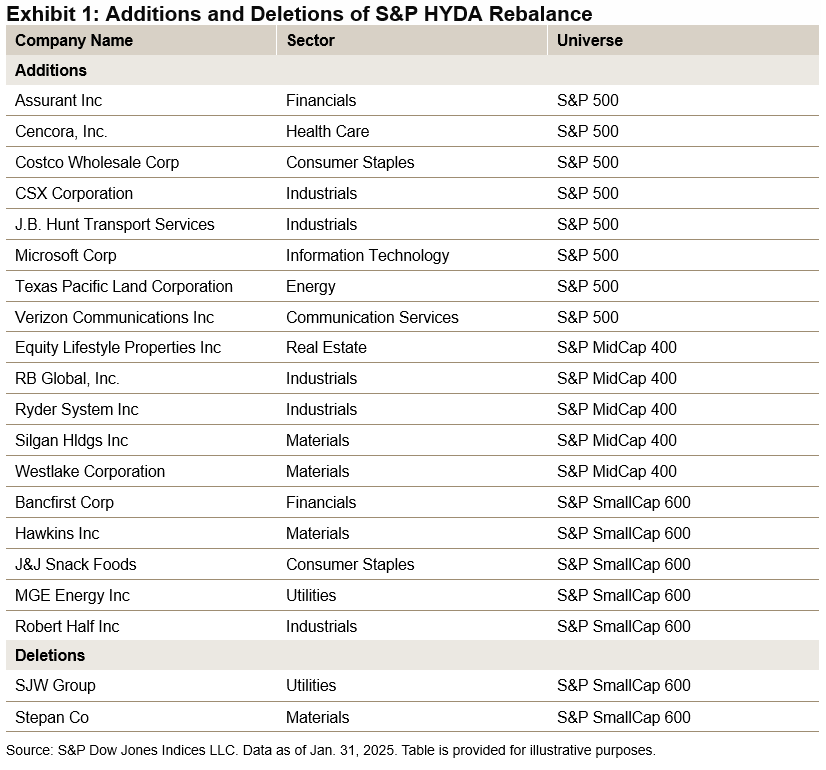
The index recently completed its annual reconstitution on Jan. 31, 2025, welcoming 18 new members into this distinguished group (see Exhibit 1). Following the inclusion of these new members and accounting for two dropouts, the index’s total constituent count has risen from 133 to 149, enhancing its overall diversification and liquidity.
Market-Cap Breakdown

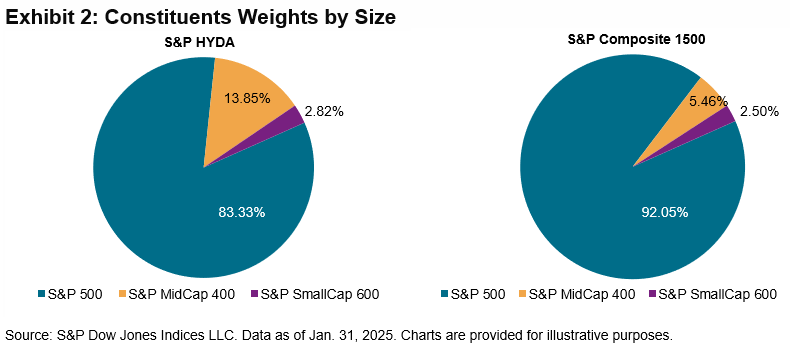
Among the 149 constituents of the S&P HYDA as of the latest rebalance, 96 stocks are sourced from the S&P 500®, 38 from the S&P MidCap 400® and 15 from the S&P SmallCap 600®. In terms of constituent weights, S&P HYDA has a higher weight in the mid-cap and small-cap segments compared to the S&P Composite 1500®, as illustrated in Exhibit 2.
Sector Breakdown

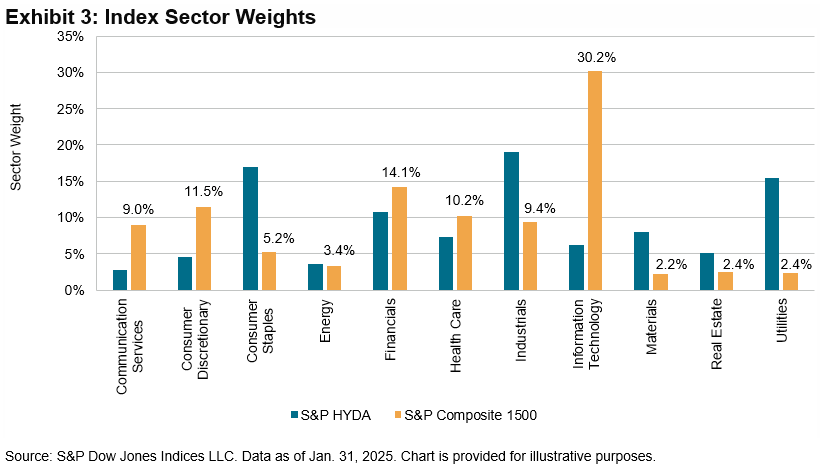
With 149 constituents, the S&P HYDA currently includes representatives from all 11 GICS® sectors: 34 constituents from Industrials, 24 from Financials, 22 from Utilities, 21 from Consumer Staples, 16 from Materials and 32 from the remaining 6 sectors.

As shown in Exhibit 3, the S&P HYDA significantly underweights the Information Technology (-24.0%), Consumer Discretionary (-6.8%) and Communications Services (-6.2%) sectors. Conversely, the index demonstrates a substantial overweight in Utilities (13.1%), Consumer Staples (11.7%) and Industrials (9.6%).
A Long History of Dividend Growth

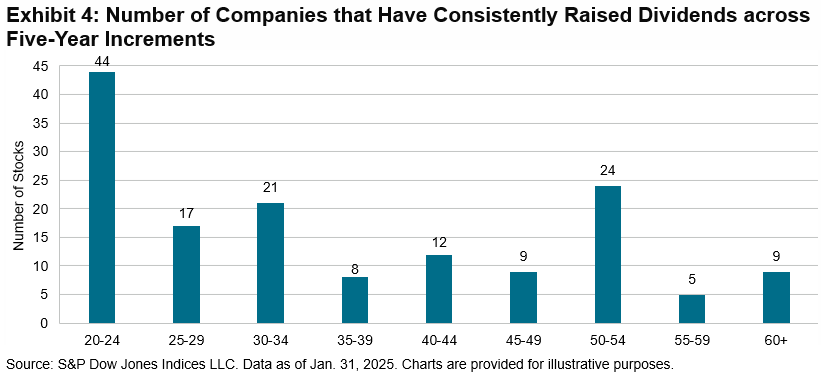
Exhibit 4 summarizes the number of constituents that have increased their dividends in five-year increments. Approximately 30% of constituents have raised their dividends for 20 to 24 years, while 39% have done so for 25 to 44 years or longer. Additionally, 32% of constituents have achieved this for 45 years or more. These track records illustrate these companies’ historically consistent ability and willingness to return increasing amounts of capital over multiple decades.

The posts on this blog are opinions, not advice. Please read our Disclaimers.

S&P 500 Dividend Aristocrats Rebalance: Erie Indemnity Company, Eversource Energy and FactSet Research Systems Are the Latest Additions

Contributor Image
George Valantasis

Director, Factors and Dividends

S&P Dow Jones Indices

The S&P 500® Dividend Aristocrats® tracks an elite group of companies that have raised their dividends for a minimum of 25 consecutive years. This index has just concluded its annual reconstitution, which was effective at the market close on Jan. 31, 2025. Erie Indemnity Company, Eversource Energy and FactSet Research Systems have been added, which increases the membership list to 69 stocks.

Introducing the Index’s Newest Members

Erie Indemnity Company

Erie Indemnity Company is a property and casualty insurance company offering auto, home, business and life insurance. According to the company website,1 Erie Insurance was founded in Erie, Pennsylvania in April 1925 by founders H.O. Hirt and O.G. Crawford.

According to their latest quarterly earnings release, as of Sept. 30, 2024, Erie Indemnity’s quarterly net income increased from USD 131.0 million in Q3 2023 to USD 159.8 million in Q3 2024, representing a 22.0% year-over-year increase.

Eversource Energy

Eversource is an energy company headquartered in Hartford, Connecticut and Boston, Massachusetts with operations that go back to the middle of the 19th century, according to their company website.2 Today they serve 4.4 million customers in the New England region.

As of Jan. 31, 2025, Eversource provided a 4.96% dividend yield, more than double the S&P 500 Dividend Aristocrats’ dividend yield of 2.39%.

FactSet Research Systems

FactSet Research Systems is a financial data and software company founded in 1978 by Howard Wille and Chuck Snyder. Its current headquarters are in Norwalk, Connecticut, and it has 37 offices in 20 countries according to the company website.3

According to FactSet’s latest quarterly earnings release, as of Nov. 30, 2024, the company was highly profitable, with a gross margin of 54.5%, a return-on-equity of 29.2% and a return on invested capital of 15.6%.

The S&P 500 Dividend Aristocrats Sector Breakdown

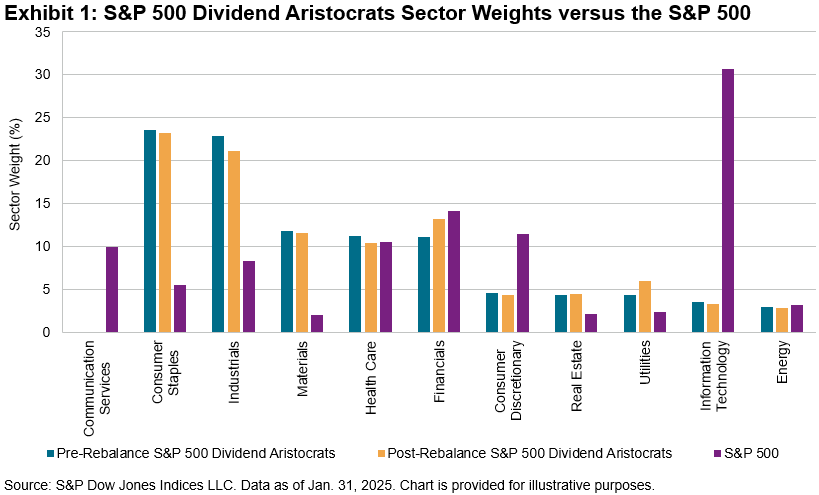
The new additions had a slight impact on the overall sector weights. As Exhibit 1 shows, the index retained its relatively large overweight in consistent dividend-paying sectors such as Consumer Staples and Industrials. Conversely, the index maintained its large underweights in the Information Technology and Communication Services sectors.

A Long History of Dividend Growth

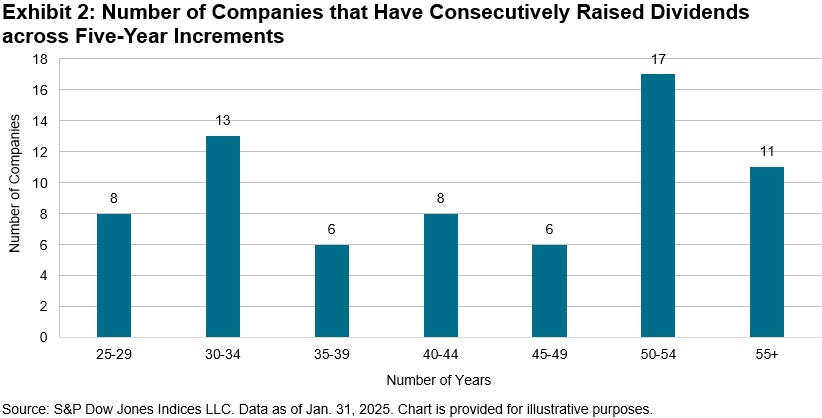
Exhibit 2 illustrates that following the most recent rebalancing, over 60% of the existing members of the S&P 500 Dividend Aristocrats have increased their dividends for at least 40 years. Additionally, more than 40% of these members have achieved dividend growth for 50 years or longer.

1https://www.erieinsurance.com/our-history
2https://www.eversource.com/content/residential/about/our-company
3https://www.factset.com/our-company

The posts on this blog are opinions, not advice. Please read our Disclaimers.

Locally Sourced but Globally Minded

Contributor Image
Anu Ganti

Head of U.S. Index Investment Strategy

S&P Dow Jones Indices

News of impending tariffs and their subsequent pause have sparked jitters throughout the market, with an intraday decline of nearly 2% for the S&P 500® on Feb. 3, 2025. In an environment of tightening trade conditions, one would expect sectors and industries with predominantly domestic customers to offer greater safety than those highly connected to international markets. But how do we determine how exposed companies are to tariffs? Rather than solely considering country of domicile, an important way to assess the economic exposure of a company is through the geographic breakdown of its revenues.

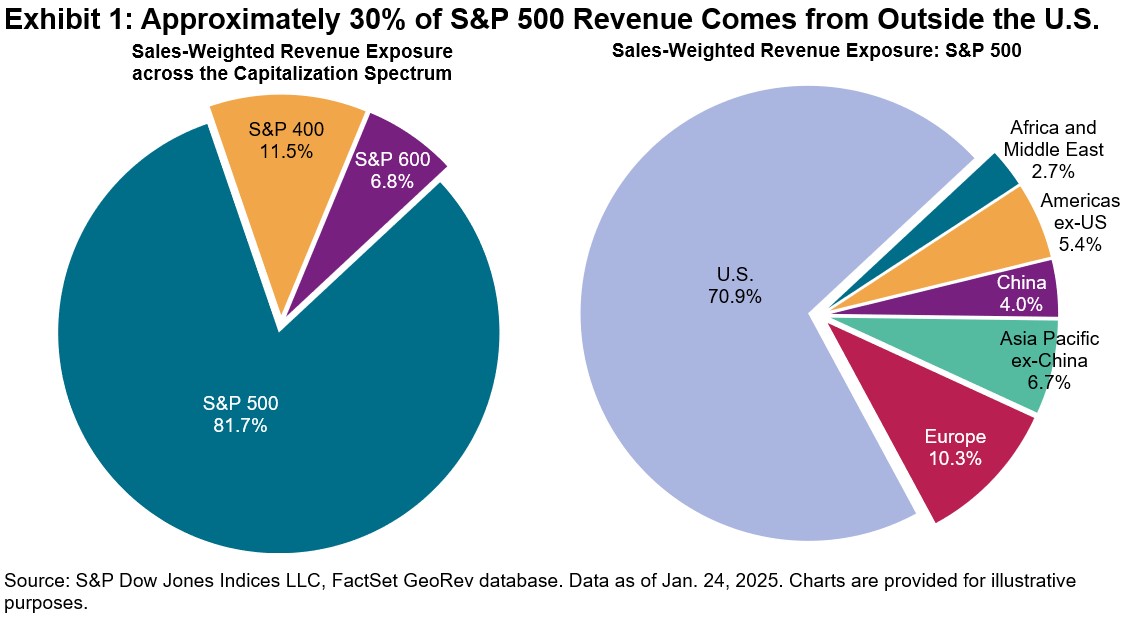
Looking across the U.S. capitalization spectrum, Exhibit 1 shows that The 500™ makes up more than 80% of the revenues across S&P Composite 1500® companies. The index is comprised of 500 companies that are all domiciled in the U.S., but only 71% of S&P 500 revenues comes from the U.S. The remainder comes from the rest of the world, including 10% from Europe and more than 10% from Asia. This is not surprising, as many large-cap companies are multinationals with an increasingly global presence.

We can understand how geographic revenue exposure to domestic versus foreign markets has affected market performance through the S&P Global Revenue Exposure Indices, which measure the performance of companies exceeding a targeted revenue exposure to certain regions or countries.

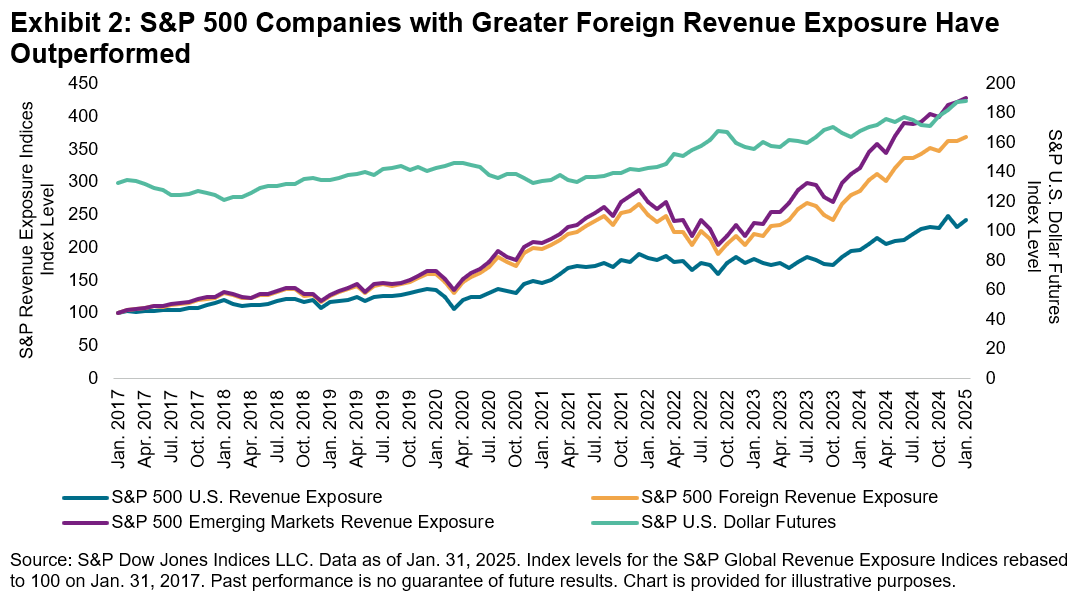
Focusing on the S&P 500, Exhibit 2 illustrates that U.S. companies with greater foreign revenue exposure have outperformed their domestic counterparts since the start of 2017. The S&P 500 Foreign Revenue Exposure and S&P 500 Emerging Markets Revenue Exposure outperformed their U.S. counterparts by 6% and 9%, respectively, over the past five years. This outperformance is notable, considering the strengthening of the U.S. dollar over the same period, which is a typical headwind for companies with high foreign exposure who earn a greater share of revenues in foreign currencies.

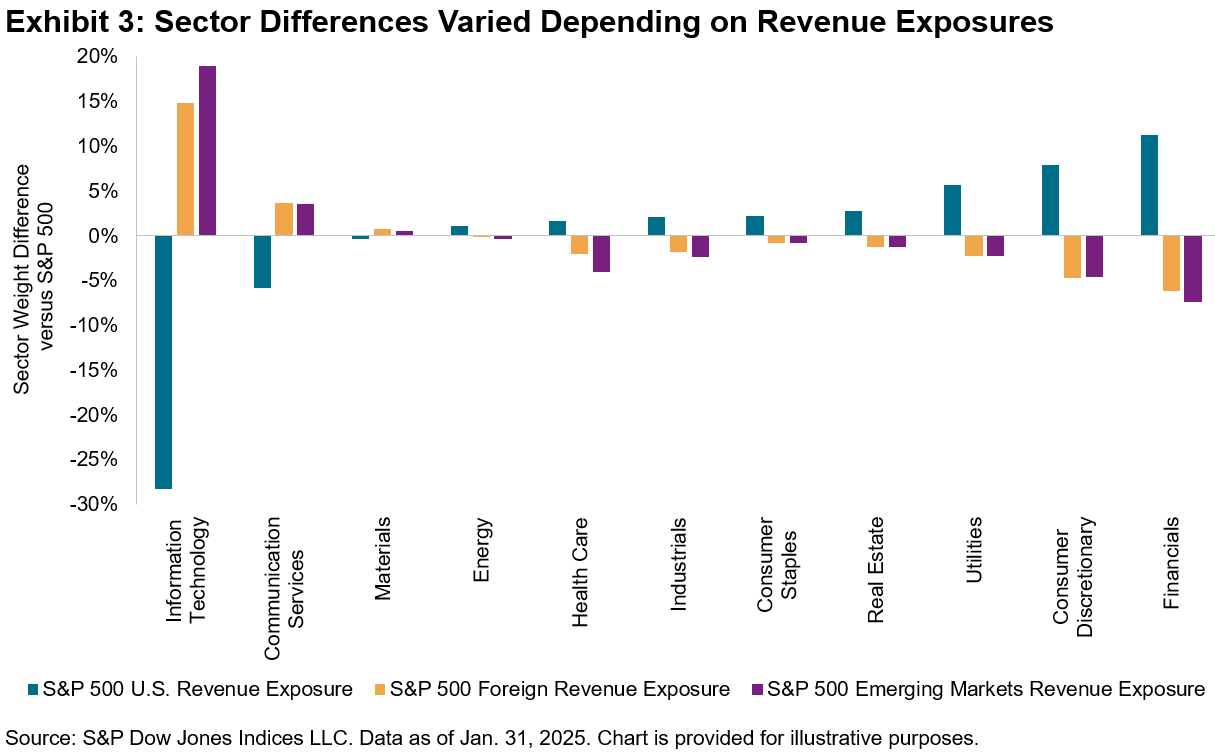
Sector tilts may be key to understanding these historical performance differentials. S&P 500 U.S. Revenue Exposure held a significant underweight to Information Technology relative to the benchmark. Meanwhile, S&P 500 Foreign Revenue Exposure and S&P 500 Emerging Markets Revenue Exposure have benefited from big tech dominance, with sizeable overweights to the sector.

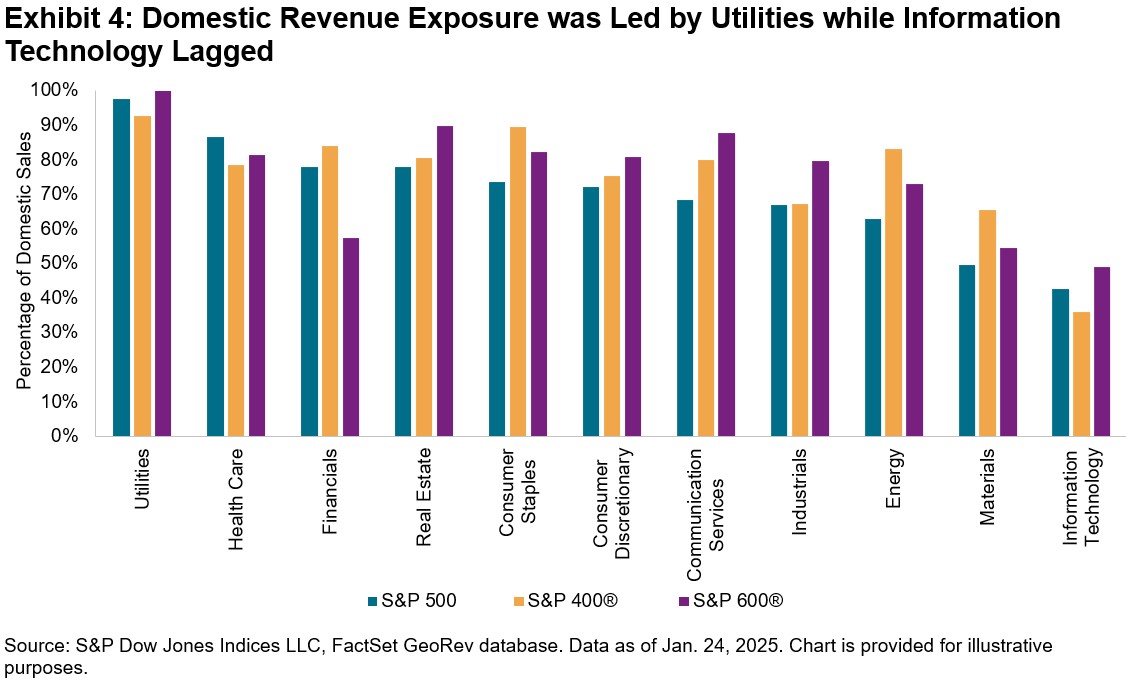
Confirming our intuition, Exhibit 4 shows that among large-, mid- and small-cap sectors, Information Technology had the lowest percentage of domestic sales. Utilities consistently had the highest domestic exposure. There were some variations across the cap range; for example, large- and mid-cap Financials had a greater domestic exposure compared to small caps, while mid-cap Energy and Materials had relatively greater domestic exposure.

As markets continue to digest the evolving tariff plans, geographic revenue analysis across sectors may continue to offer insightful perspectives. The S&P 500 U.S. Revenue Exposure, S&P 500 Foreign Revenue Exposure and S&P 500 Emerging Markets Revenue Exposure indices offer a convenient way to observe price impact at a diversified level, while sector (and industry) approaches to risk management may prove more powerful than usual in balancing the desired exposures to sources of revenue globally.

What’s the potential impact of tariffs on U.S. equities across sectors and industries? S&P DJI’s Benedek Vörös takes a quick look at the S&P Revenue Exposure Indices and the importance of granular, industry level analysis in this installment of The Market Measure.

The posts on this blog are opinions, not advice. Please read our Disclaimers.

From Cocoa to Gold: The S&P GSCI's Top Performers in 2024 and Seasonal Trends in 2025

Contributor Image
Rebecca Kaufman

Associate Director, Commodities and Fixed Income Tradables

S&P Dow Jones Indices

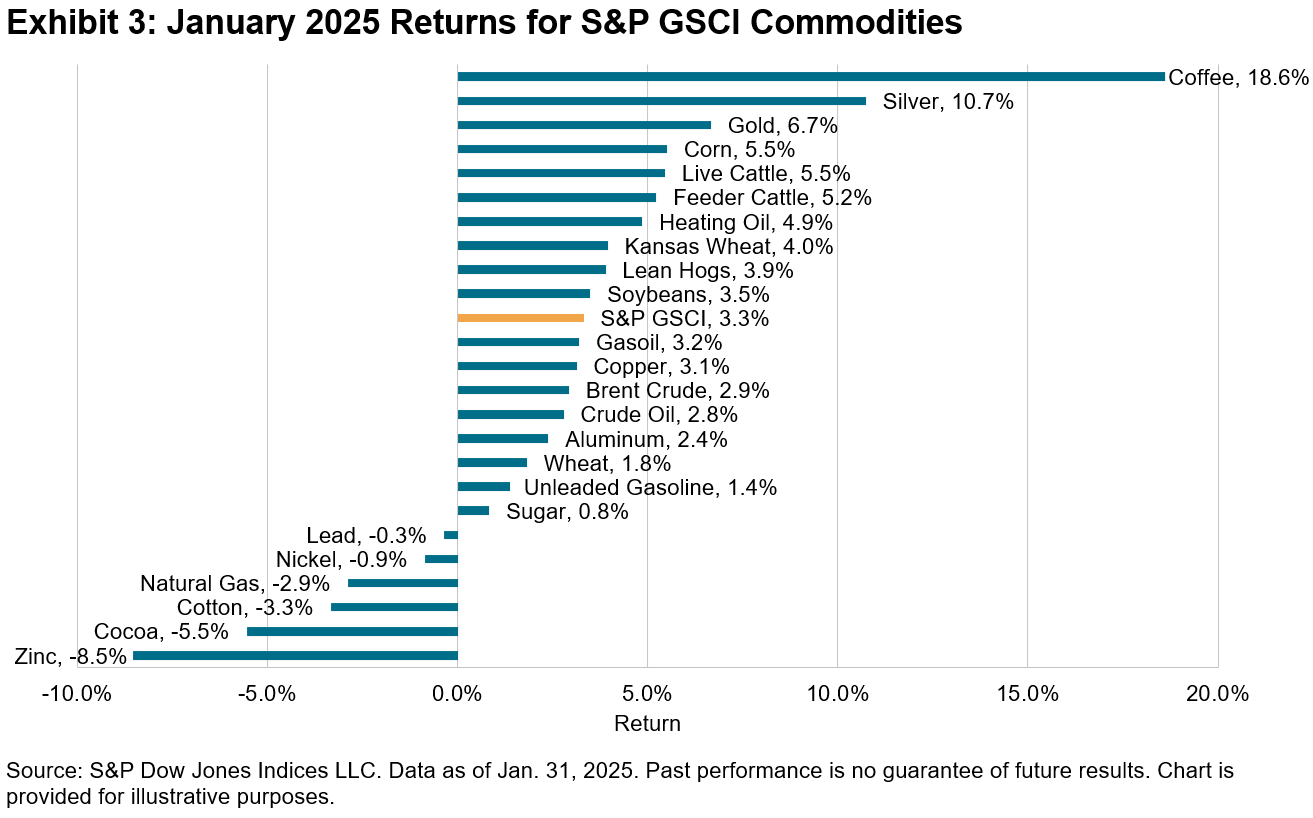
Following the close of 2024, the S&P GSCI continued its strong performance into the new year, ending January 2025 up 3.3%. As we move deeper into Q1, we dig into the reasons behind the S&P GSCI’s leaders and laggards in 2024 and the seasonality inherent to commodity futures performance.

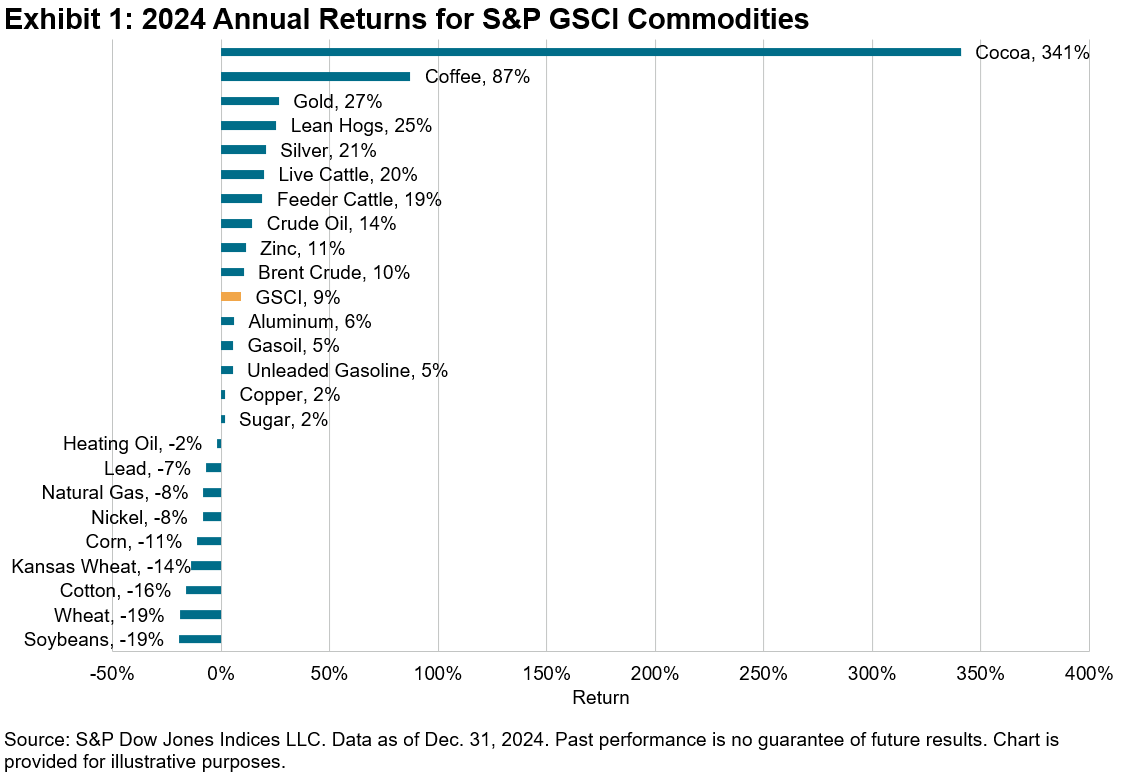
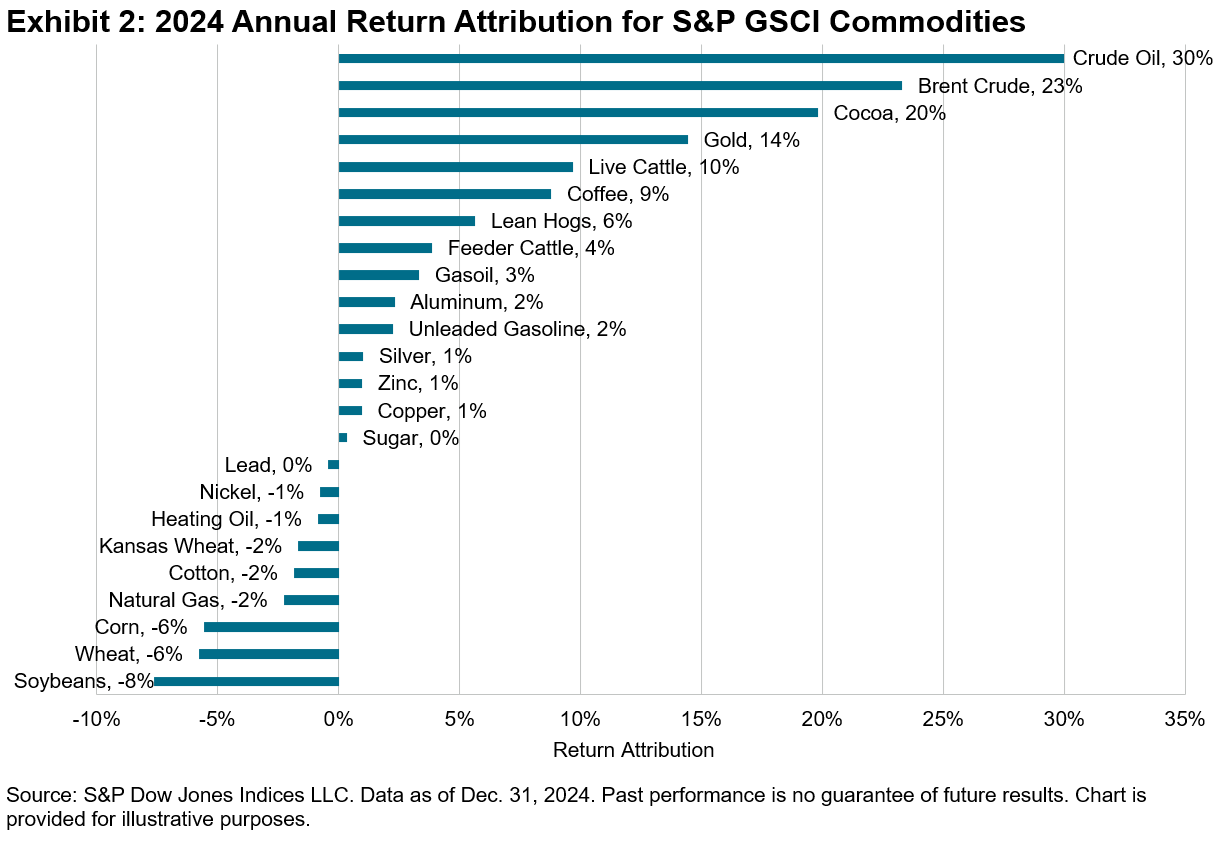
In 2024, the top three performers were cocoa, coffee and gold, up 341%, 87% and 27%, respectively. Cocoa futures’ outstanding performance, driven by a perfect storm of poor weather and black pod disease, exceeded even bitcoin, up 122%, and the S&P 500®, up 25% for 2024. Despite this, the world’s top cocoa-growing countries are scaling back cocoa production due to farmers’ inability to fully reap the benefits of global price increases. Further depressed supply, as farmers shift their focus to more profitable crops, could lead to a continued cocoa rally well into 2025 and beyond. Coffee faces a similar future, with persistent drought conditions in Brazil.

Meanwhile, gold, up 27% in 2024, has proven to be the best-performing asset in the 21st century, with an annualized return of 8.5%, compared to the S&P 500 annualized return of 7.7%. Gold continued to reign as a favorite for investors seeking safety during economic and political uncertainty.

After Trump was elected in November, concern over wide-reaching tariffs has pushed gold traders to fly gold from London to New York. Fearing potential gold liquidity shortages in London, the primary spot market for gold, traders are driving gold futures prices to a premium. The friction inherent in the market for physical gold, including the difference in gold bar size for settlement in New York and London, indicate the premium in the futures market is not likely to be eliminated through arbitrage. The S&P GSCI Gold reflects this premium. Alternatively, the S&P GSCI Gold Covered Call offers a view into a strategy that could allow for income to be generated from an otherwise “unproductive” asset.

Looking ahead to Q1 2025, seasonal impacts and demand imbalances on certain commodities, such as heating fuels and agricultural goods, continue to draw attention. According to the U.S. Census, about 47% of U.S. households heat their homes with gas.1 Given the polar vortex sweeping through the U.S., heating oil futures prices are being bid up. In January 2025, the S&P GSCI Heating Oil TR was up 4.9%.

Strong winds and an increasing number of storms mean severe temperatures may hit areas in the U.S. South that are ill-equipped to handle extreme weather. Local supply shortages from supply chain disruptions, aging infrastructure or lack of sufficient inventory can all increase spot prices and spur commodity traders to hedge against them.

Livestock, particularly live cattle, also typically perform well during the winter months, as heartier meals and traditional holiday fare become popular. The S&P GSCI Live Cattle TR was up 5.2% in January 2025. Freezing temperatures in the Midwest and Central Plains have kept cows lean; meanwhile, the USDA has unexpectedly continued its suspension of live cattle imports from Mexico due to parasites. Despite this strain on supply, consumers have responded to increased prices with only modest levels of substitution. Per capita beef consumption in Q1 2025 is expected to maintain its level at 14.9 pounds per year, according to the USDA.2

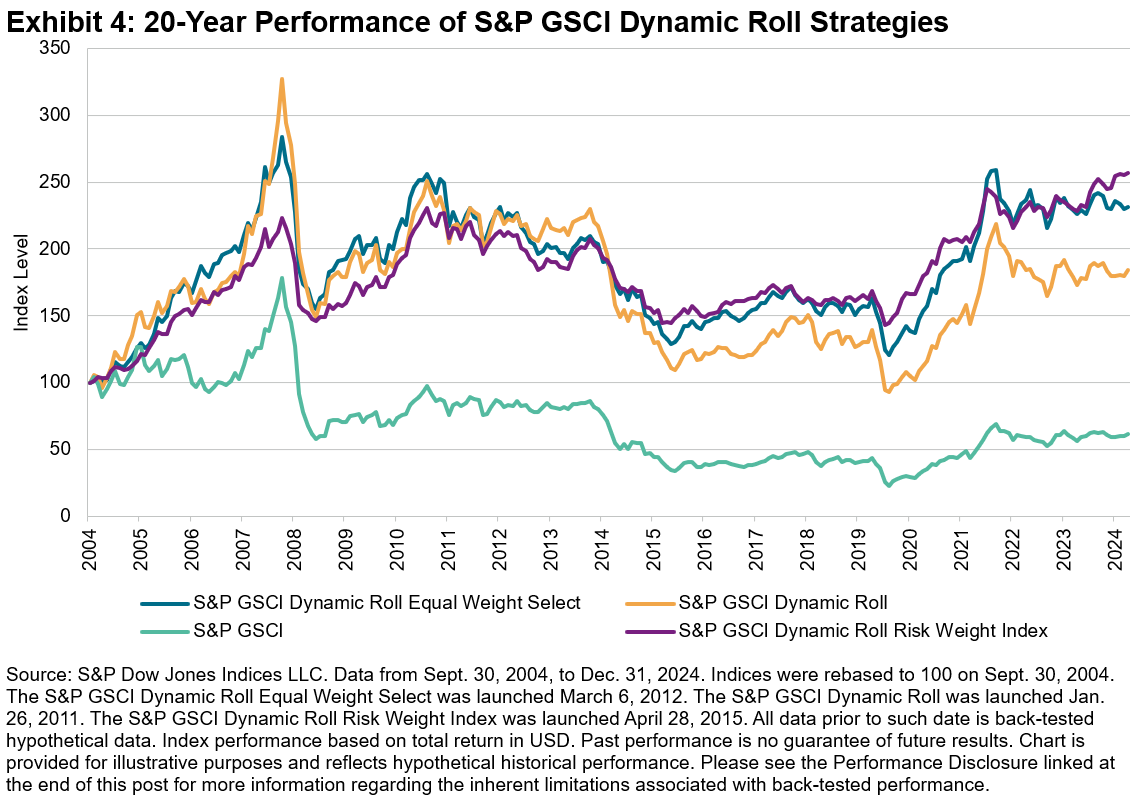
While the S&P GSCI measures the performance of the world’s largest commodities, roll yield dynamics can have a significant impact on returns. This is particularly important for commodities that exhibit seasonal performance trends. The S&P GSCI holds the front month contract and rolls into the next month’s contract upon expiry. When the next month’s contract price exceeds that of the front month contract—a situation known as contango—this results in negative roll yield (buying high and selling low). The S&P GSCI Dynamic Roll takes a different approach, rolling into contracts along the futures curve based on implied roll yield. Variants of the S&P GSCI Dynamic Roll include the S&P GSCI Dynamic Roll Equal Weight Select, which equally weights the most liquid 14 commodities of the S&P GSCI, and the S&P GSCI Dynamic Roll Risk Weight Index, which applies a risk parity concept to each commodity sector. Exhibit 4 shows how these indices compared over the past 20 years, including some periods of back-tested performance.

1 United States Census Bureau. “Why We Ask Questions About Home Heating Fuel.” Accessed January 2025.

2 Knight, Russell, Hannah Taylor, William Hahn, Adriana Valcu-Lisman, Angel Terán, Mildred Haley, Grace Grossen and Brian Bourquard. “Livestock, Dairy, and Poultry Outlook: January 2025.” USDA. Jan. 16, 2025.

The posts on this blog are opinions, not advice. Please read our Disclaimers.

Uncovering Companies' Climate Resilience

Contributor Image
Barbara Velado

Former Associate Director, Global Equity Indices

S&P Dow Jones Indices

Climate resilience refers to the ability of a system to anticipate, prepare for and respond to the impacts of climate change.1 As the world grapples with the adverse effects of a changing climate, climate resilience stands front and center in collective efforts from governments, corporations and the investment community2 alike. This blog is the first of a two-part series exploring a forward-looking framework to assess companies’ climate action across different dimensions. Our next blog will examine how this framework can be used to create index strategies in a rules-based, transparent way.

Measuring Companies’ Readiness for the Transition to a Low Carbon Economy

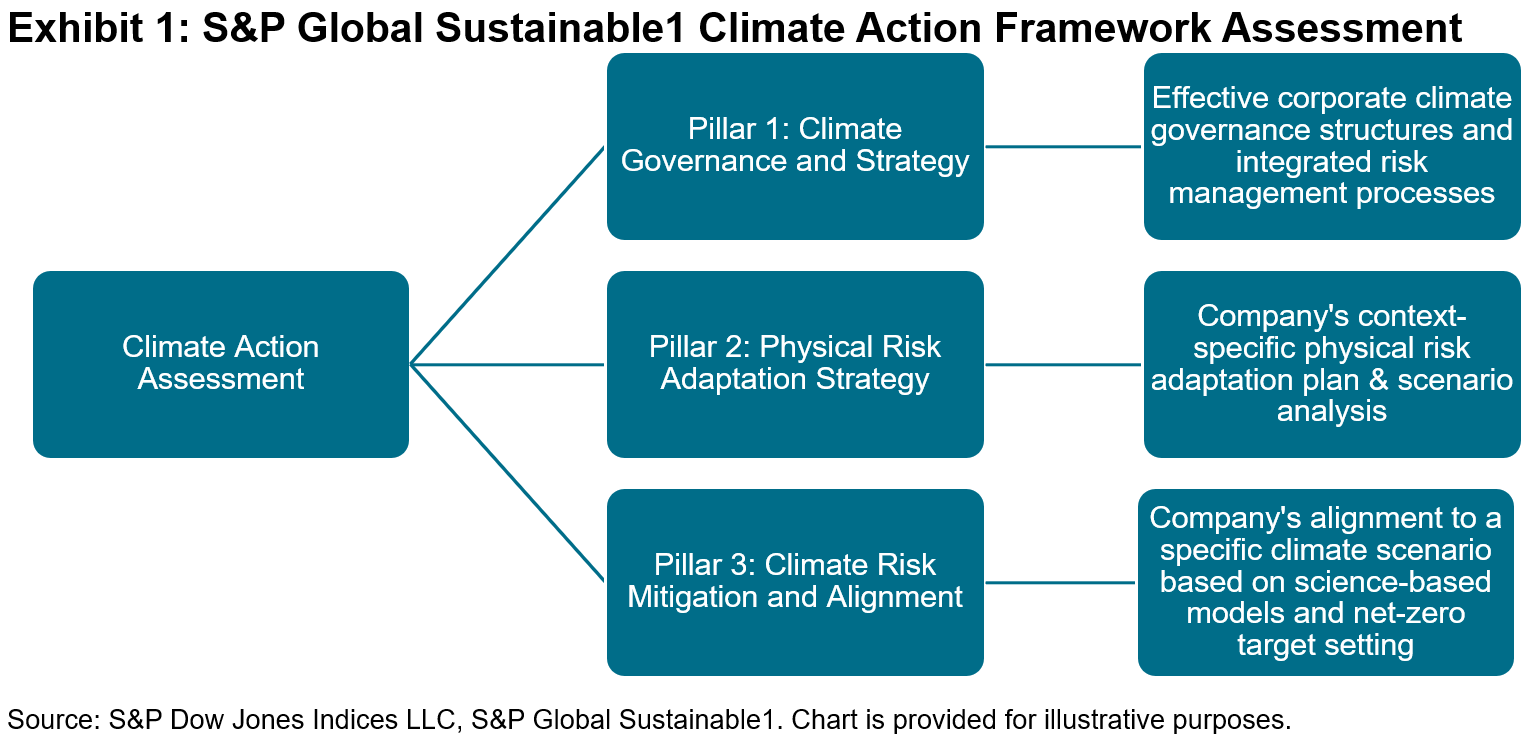
The S&P Global Sustainable1 Climate Action Framework is an innovative dataset that assesses companies’ ability to manage the risks of transitioning to a low-carbon economy through the lens of three key dimensions:

  • Climate Governance and Strategy;
  • Physical Risk Adaptation Strategy; and
  • Climate Risk Mitigation and Alignment.

The assessment leverages raw data collected from S&P Global’s Corporate Sustainability Assessment (CSA), which underpins the S&P Global ESG Scores. Additionally, it integrates established metrics such as implied temperature rise, revenue exposure from business activities and various environmental indicators to provide a comprehensive evaluation of a company’s risk management capabilities, adaptability to physical risks and strategies for mitigating future climate challenges.

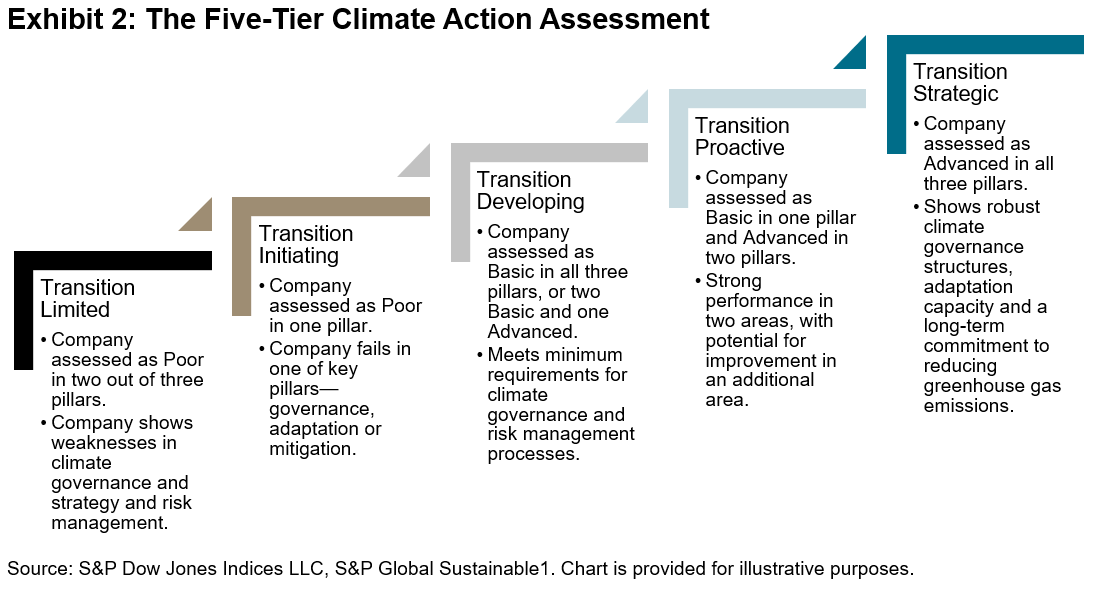
The framework categorizes companies’ performance across each of the three key pillars, as well as on an aggregate-level assessment. Companies can be classified as having “Advanced,” “Basic” or “Poor” performance across the pillars. Combined, these classifications result in a five-tier aggregate assessment (see Exhibit 2) ranging from “Transition Limited,” where companies lack basic governance structures, climate risk management processes and target-setting, to “Transition Strategic,” in which companies demonstrate robust climate strategies, comprehensive risk management plans and a long-term commitment to achieve net zero emissions.

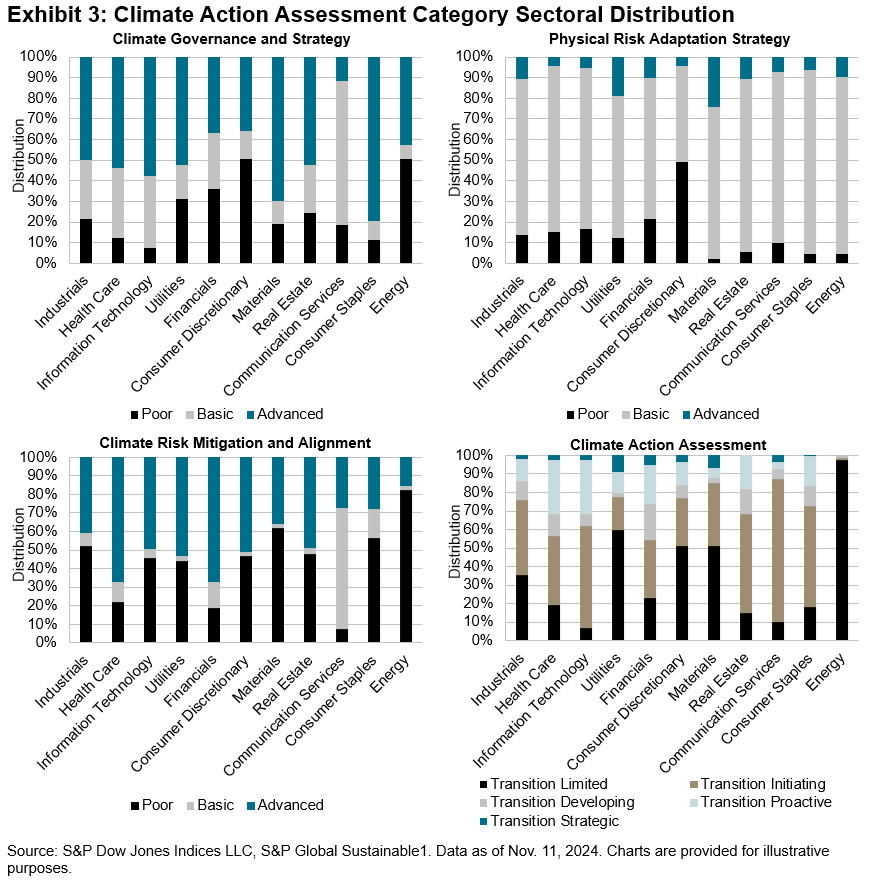
We examined the sectoral breakdown of each of the pillars and the final Climate Action Framework assessment within the S&P World Index (see Exhibit 3). Across sectors, we see a wide distribution of outcomes for each of the categories.

In general, we observe a considerable portion of companies across sectors that were assessed as Poor and Advanced for the Climate Governance and Strategy and Climate Risk Mitigation Pillars. However, most companies have a Basic physical risk adaptation strategy, and very few can be considered Advanced, suggesting that generally, companies lack context-specific adaptation plans. Aggregating the pillars, we see most companies classified at the bottom two tiers as either Transition Limited or Transition Initiating, reflecting the increasing climate action ambition required by the top tiers.

Taking the Energy sector as an example, we see that:

  • Roughly 50% of companies lack adequate climate governance practices, classifying them as Poor within Pillar 1;
  • The vast majority have sufficient overall physical risk adaptation plans and conducted scenario analysis, classifying them as Basic within Pillar 2; and
  • Approximately 80% of companies are classified as Poor within Pillar 3, most likely due to their higher implied temperature alignment and the lack of net zero targets covering Scope 3 emissions.

On an aggregate level, we observe that 97% of energy companies are ranked as Transition Limited, suggesting that there is still much room for improvement on the climate front for most companies in the sector.

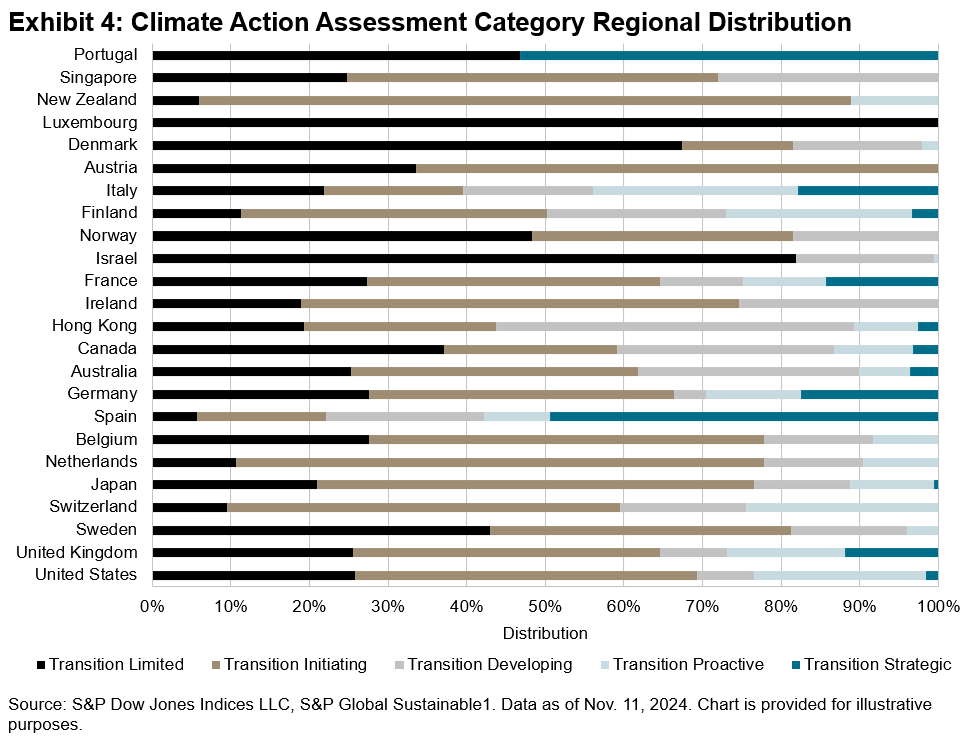
From a regional perspective, we observe a similar pattern in which there is a varied distribution of categories across regions (see Exhibit 4). Exploring the U.S., which comprises around 70% of the S&P World Index by market capitalization, we see most companies classified as either Transition Limited or Transition Initiating (i.e., the bottom two categories), and only 2% achieved the highest rank of Transition Strategic.

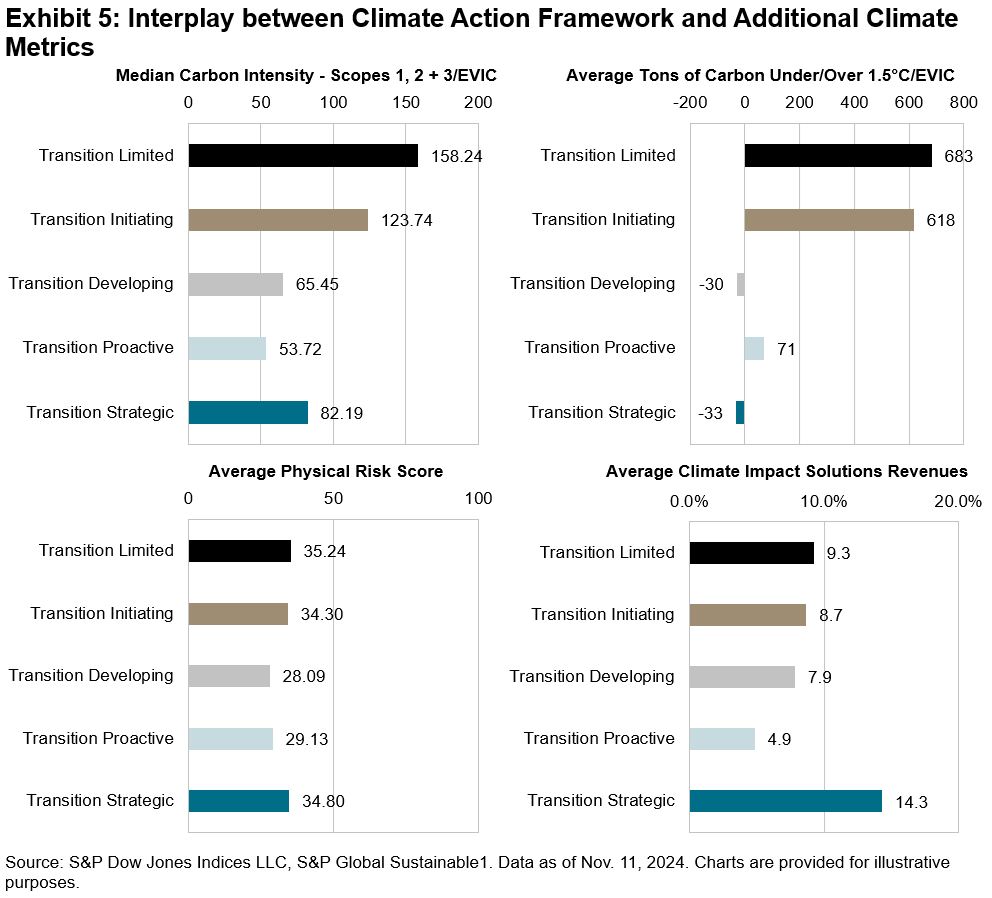
Analyzing the interplay between the Climate Action Framework assessment and other climate data points reveals interesting insights (see Exhibit 5).

  • There was a positive pattern between carbon efficiency and climate action, in which companies with enhanced climate governance and risk management structures also tend to be relatively more carbon efficient.
  • There was a relationship between forward-looking temperature rise and climate action practices—we see that Transition Strategic companies were under their 1.5°C carbon budget, indicating forward-looking alignment with the Paris Agreement goals.
  • There was not a strong pattern regarding physical risk, suggesting that physical risk may need to be addressed separately in an index that incorporates climate action assessments, to mitigate tail risk.
  • It is worth noting that Transition Strategic companies displayed the highest revenue alignment with climate impact solutions, such as renewable energy, sustainable transportation and battery technology.

In the second part of this blog series, we will explore the recently launched S&P World Climate Resilience Tilted Index, which incorporates elements of the S&P Climate Action Framework and additional climate datapoints to tilt toward companies that are relatively more climate resilient and carbon efficient, and that have higher exposure to climate impact solutions.

1 Intergovernmental Panel on Climate Change. “Climate Change 2022: Impacts, Adaptation and Vulnerability.” 2022.

2 Vijayakumar, C. “Collective action is the key to drive urgency in building climate resilience.” World Economic Forum. Jan. 19, 2025.

The posts on this blog are opinions, not advice. Please read our Disclaimers.