








































When considering the success of an index, many often think in terms of performance metrics. However, the true measure of an index’s success lies in how well it meets its objectives. The S&P 500® ESG Index focuses on selecting and ranking index constituents using ESG scores compared to the underlying S&P 500. The index achieves this by selecting the top 75% of companies by float-adjusted market capitalization (FMC) within each GICS® industry group based on their ESG score rankings. This blog examines the evolution of ESG scores within the index since its launch in January 2019.
In early 2024,1 a significant transition occurred from the S&P DJI ESG Scores to the S&P Global ESG Scores. This change of ESG scores was made due to the enhanced modeling approach used by the S&P Global ESG Scores and a desire to standardize the scoring framework across S&P Global.
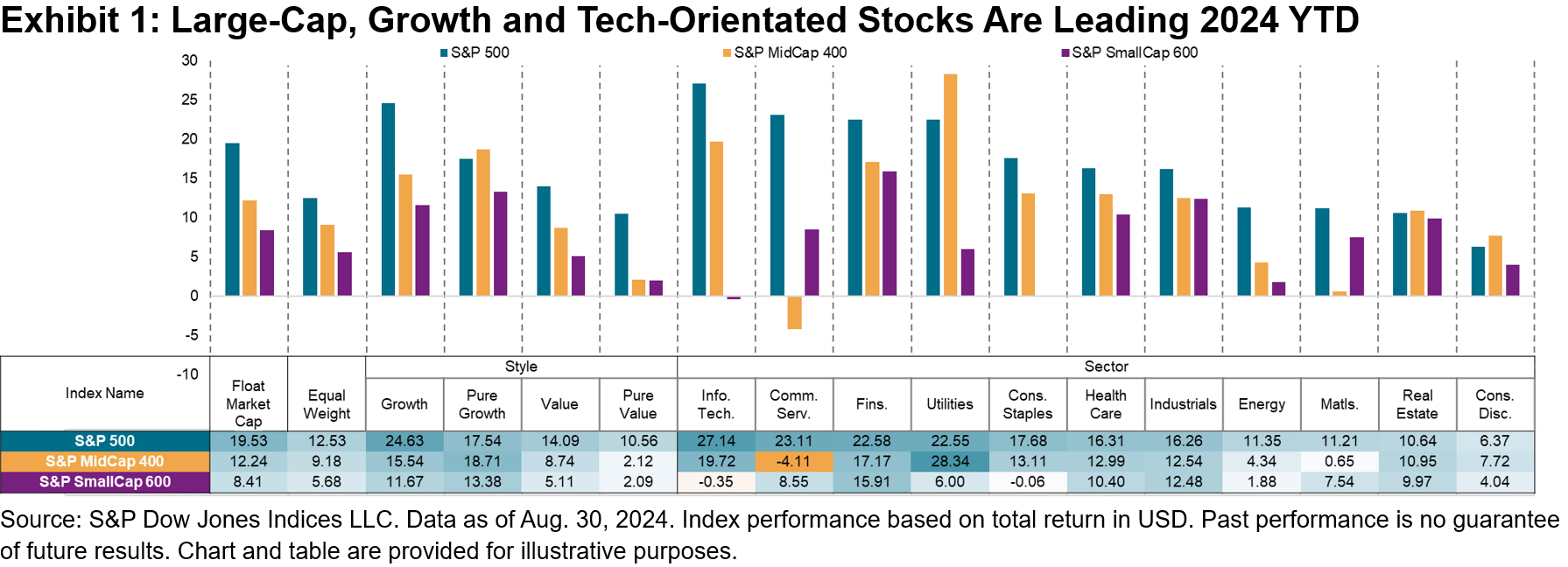
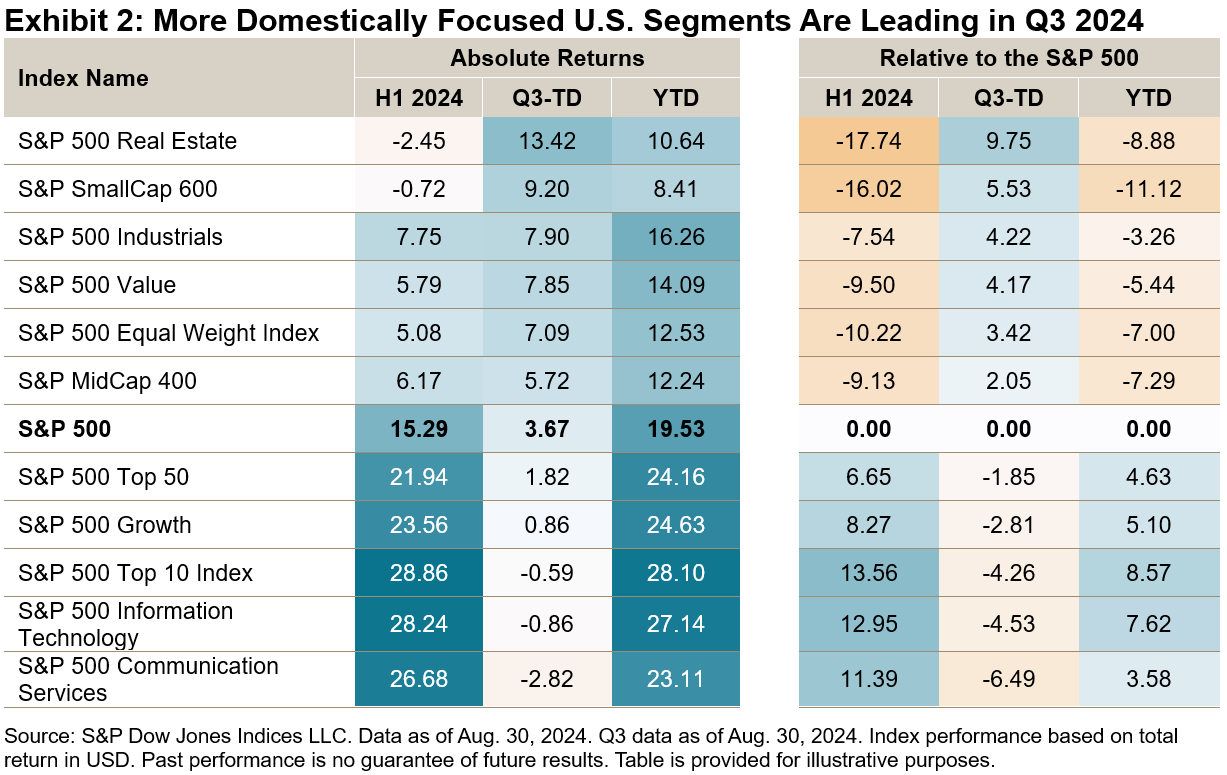
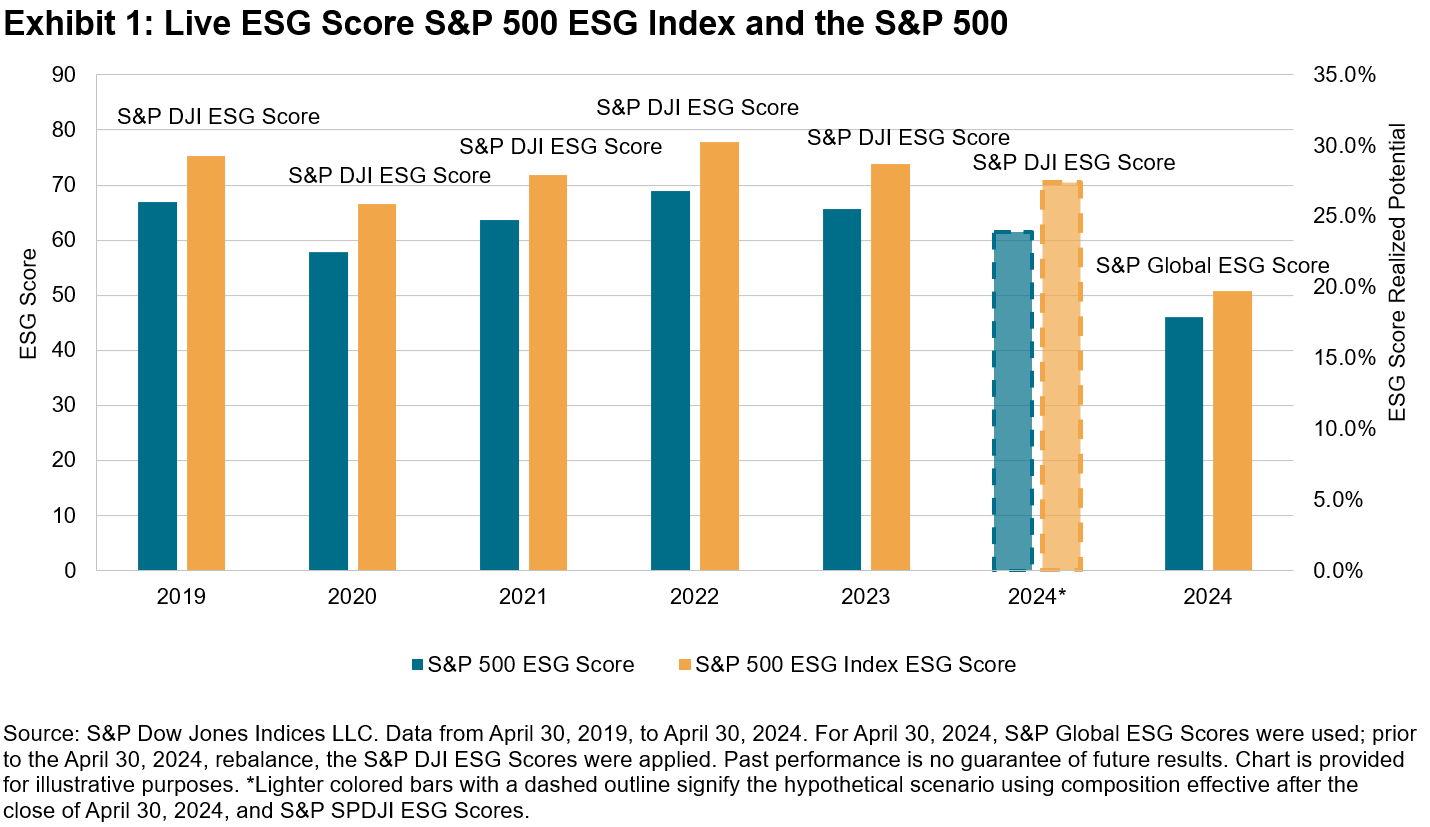
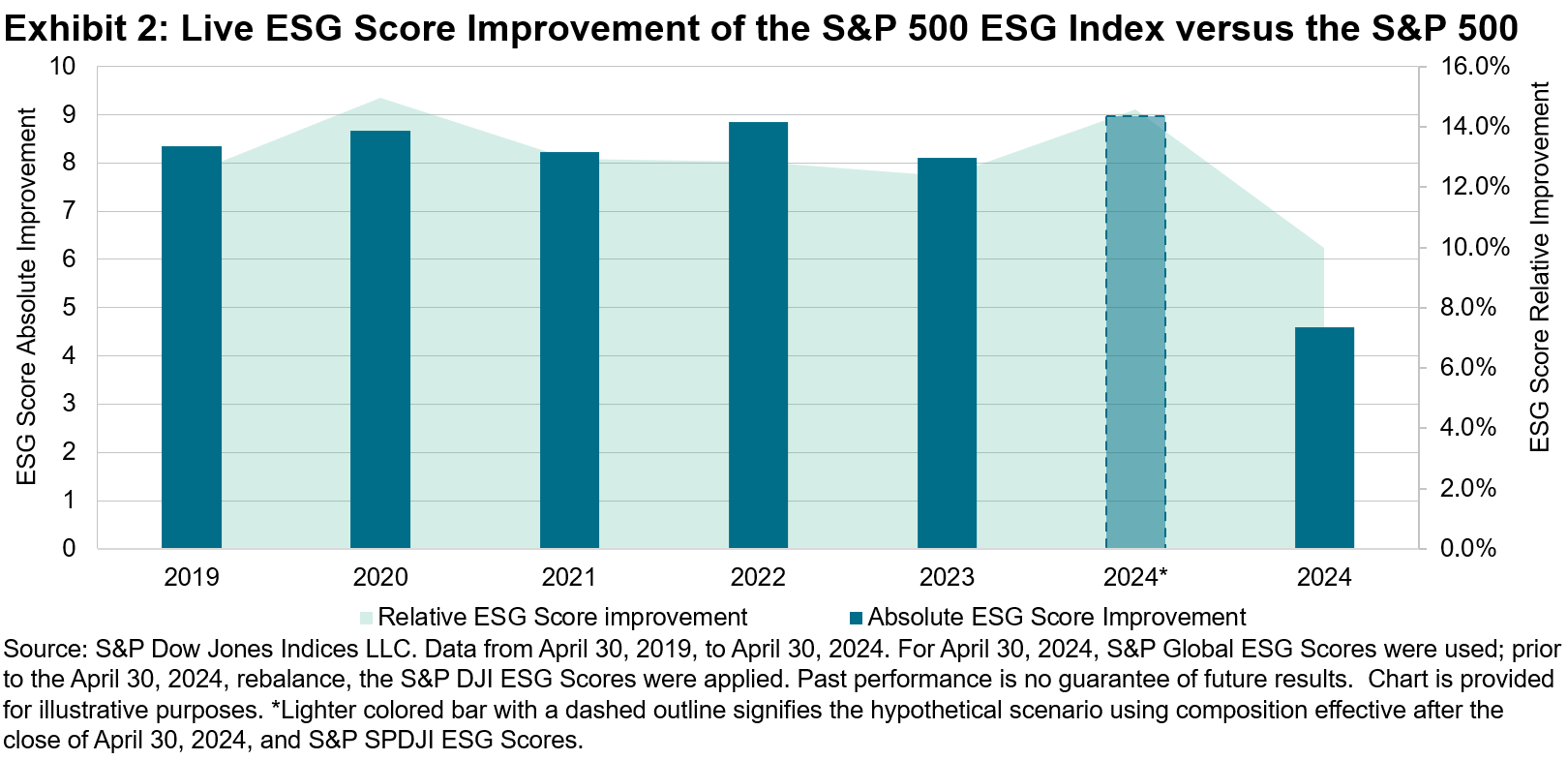
For comparison purposes, we consider a hypothetical scenario using the composition effective after April 30, 2024, using S&P DJI ESG Scores, enabling an “apples-to-apples” comparison. By analyzing these hypothetical outcomes, stakeholders can gain insights into what the index ESG score would be with the former set (S&P DJI ESG Scores) and the current composition of the S&P 500 ESG Index. Over the past five years, the ESG score of the S&P 500 ESG Index has consistently improved relative to the S&P 500 (see Exhibit 1). On average, the index has historically achieved an absolute improvement of 8.5 points and a relative improvement of 13.4%.2 Considering the new S&P Global ESG Scores, the percentage improvement seems to have dropped; however, we still see an absolute improvement of 4.6 points, which corresponds to approximately a 10% relative improvement (see Exhibit 2).
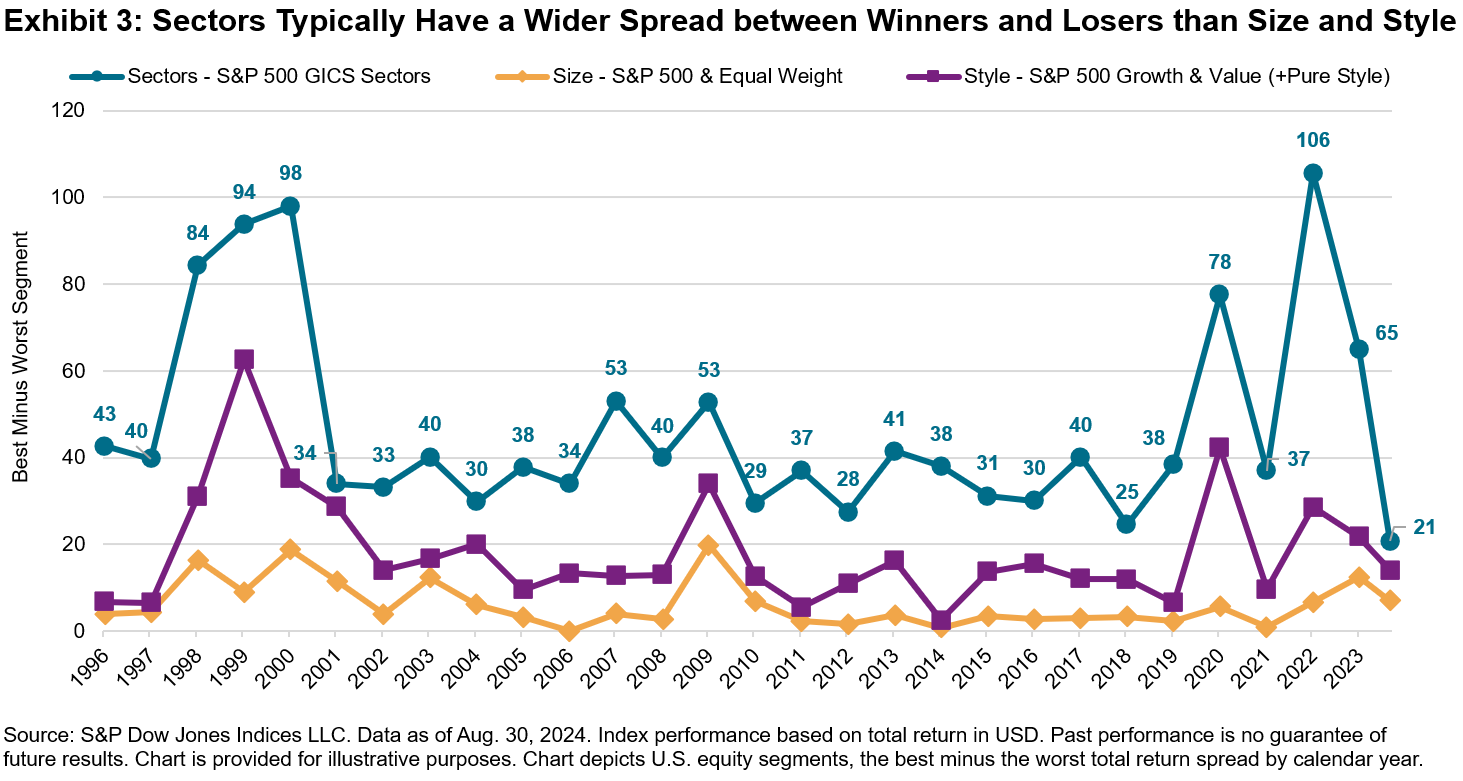
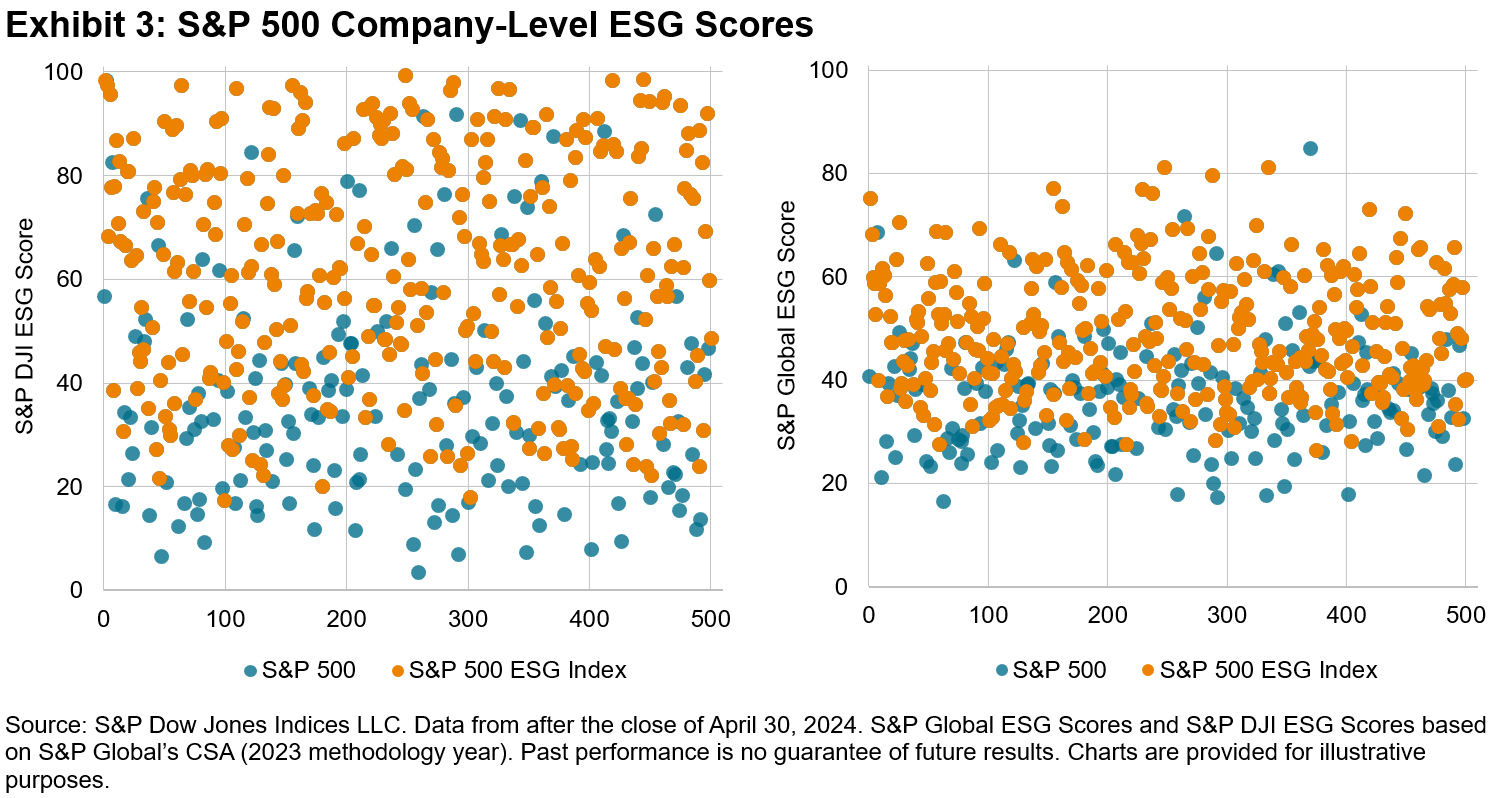
As mentioned in the paper The S&P 500 ESG Index: 5 Years of Defining Core through an ESG Lens, the S&P Global ESG Scores3 have a more normalized distribution of scores compared to the S&P DJI ESG Scores, thanks to enhanced modeling approaches that minimize size and disclosure biases. Note the S&P DJI ESG Scores4 used S&P Global Corporate Sustainability Assessment (CSA) Scores that assigned a score of zero where relevant company data was undisclosed, skewing results. The methodology5 for the S&P Global ESG scores assigns modeled scores based on industry correlations, which is likely to be more representative of companies’ sustainability performance across industries, various sizes and regions. Consequently, fewer companies achieve high scores as the scoring system now reflects an assessment of ESG risks, opportunities and impacts informed by a combination of company disclosures, media and stakeholder analysis, modeling approaches, and in-depth company engagement via the S&P Global CSA. This shift effectively raises the bar for what constitutes a high score, resulting in a more competitive landscape (see Exhibit 3).
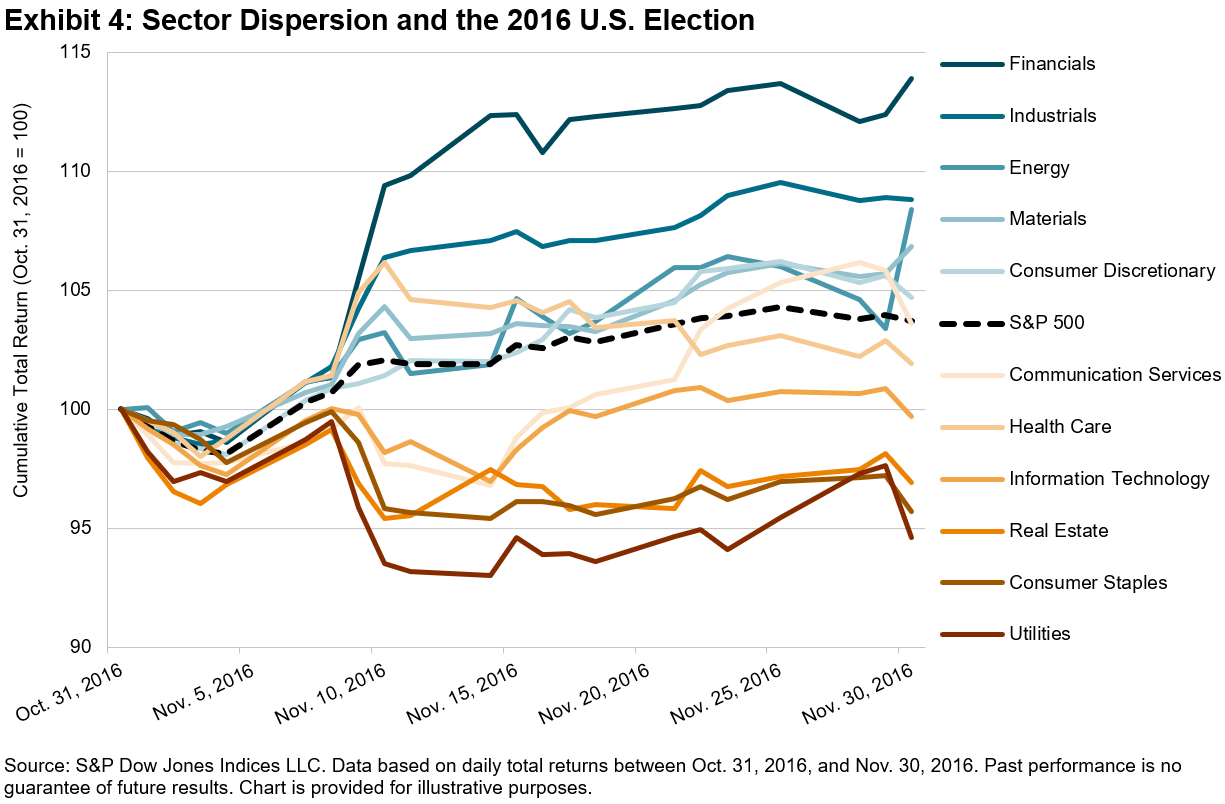
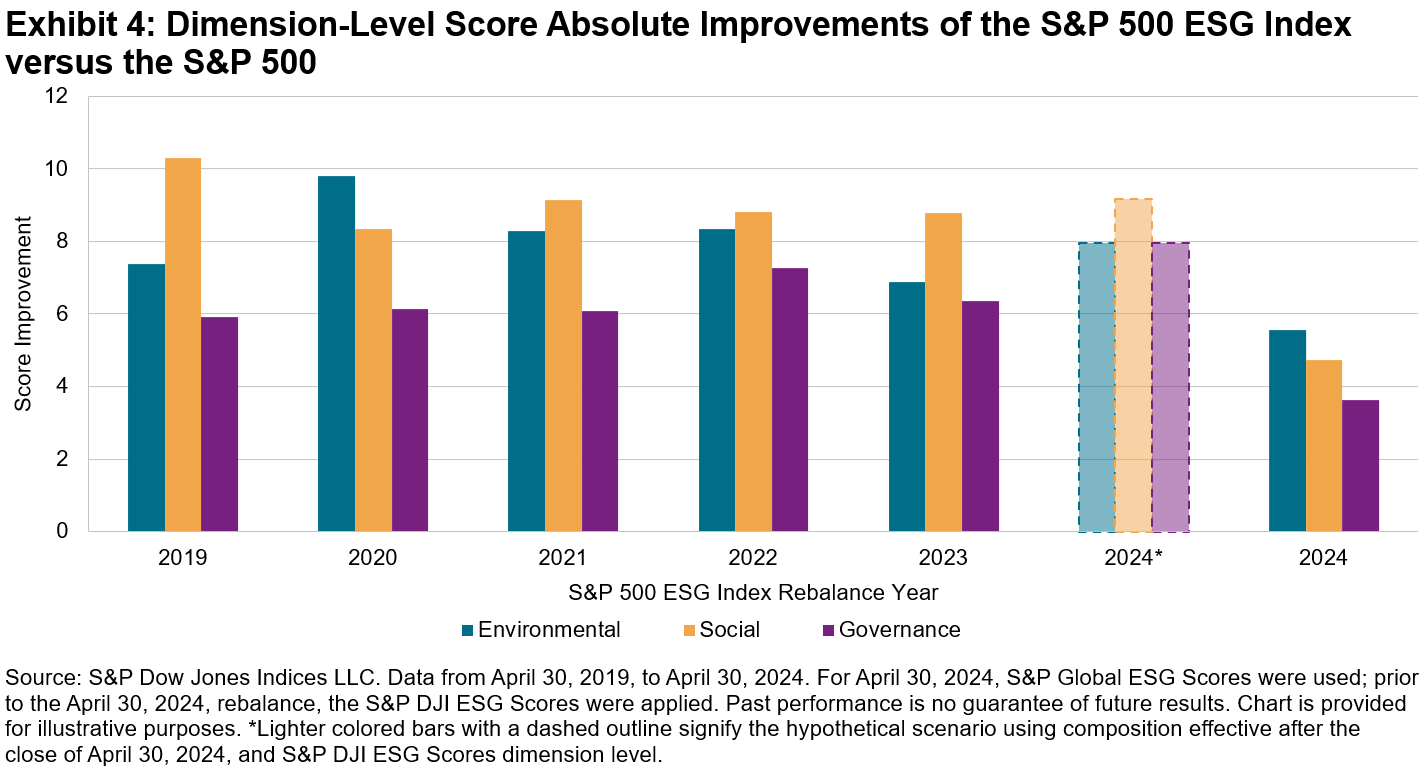
Additionally, the historical improvement of index-level ESG scores of the S&P 500 ESG Index compared to the S&P 500 is evident across various dimensions—environmental, social and governance—as illustrated in Exhibit 4.
Conclusion
Despite the scores transition, the S&P 500 ESG Index has still been able to improve index-level ESG scores compared to the S&P 500 by incorporating ESG factors into its construction process. This is also evident at the dimension level across environmental, social and governance criteria.
For more information on how the S&P 500 ESG Index measures the S&P 500 through an ESG lens, please refer to The S&P 500 ESG Index: 5 Years of Defining Core through an ESG Lens.
It should be noted that the S&P 500 ESG Index is a broad-based index that measures the performance of securities from the S&P 500 that meet specified sustainability criteria, while maintaining similar overall industry group weights as the S&P 500; consequently, securities that some may consider are not sustainable will be constituents of the S&P 500 ESG Index.
1https://www.spglobal.com/spdji/en/documents/indexnews/announcements/20240123-1470259/1470259_sp-glb-bis-glb-esg-scores-consult-results-1-23-2024.pdf
2 Using the S&P DJI ESG Scores
3 Transitioning S&P Sustainability Indices to S&P Global ESG Scores and Business Involvement Screens
4 S&P DJI ESG Score Methodology
5 S&P Global ESG Scores Methodology
The posts on this blog are opinions, not advice. Please read our Disclaimers.