








































Get Indexology® Blog updates via email.

In This List

Diversification across Durations

Why Does Index Liquidity Matter?

Looking at Trends in the S&P UBS Leveraged Loan Index

Navigating Market Cycles: The Complementary Roles of Quality and Momentum Indices

Examining the S&P 500 High Dividend Index amid Changes in Monetary Policy

Diversification across Durations

Contributor Image
Anu Ganti

Head of U.S. Index Investment Strategy

S&P Dow Jones Indices

The S&P 500® surged to a third all-time closing high on Oct. 28, 2025, up 18% YTD. But the ride for U.S. equity investors has not always been a smooth one, with the index recouping sharp losses from earlier in the month on renewed tariff-related concerns and regional bank losses, coupled with AI bubble1 jitters looming in the background.

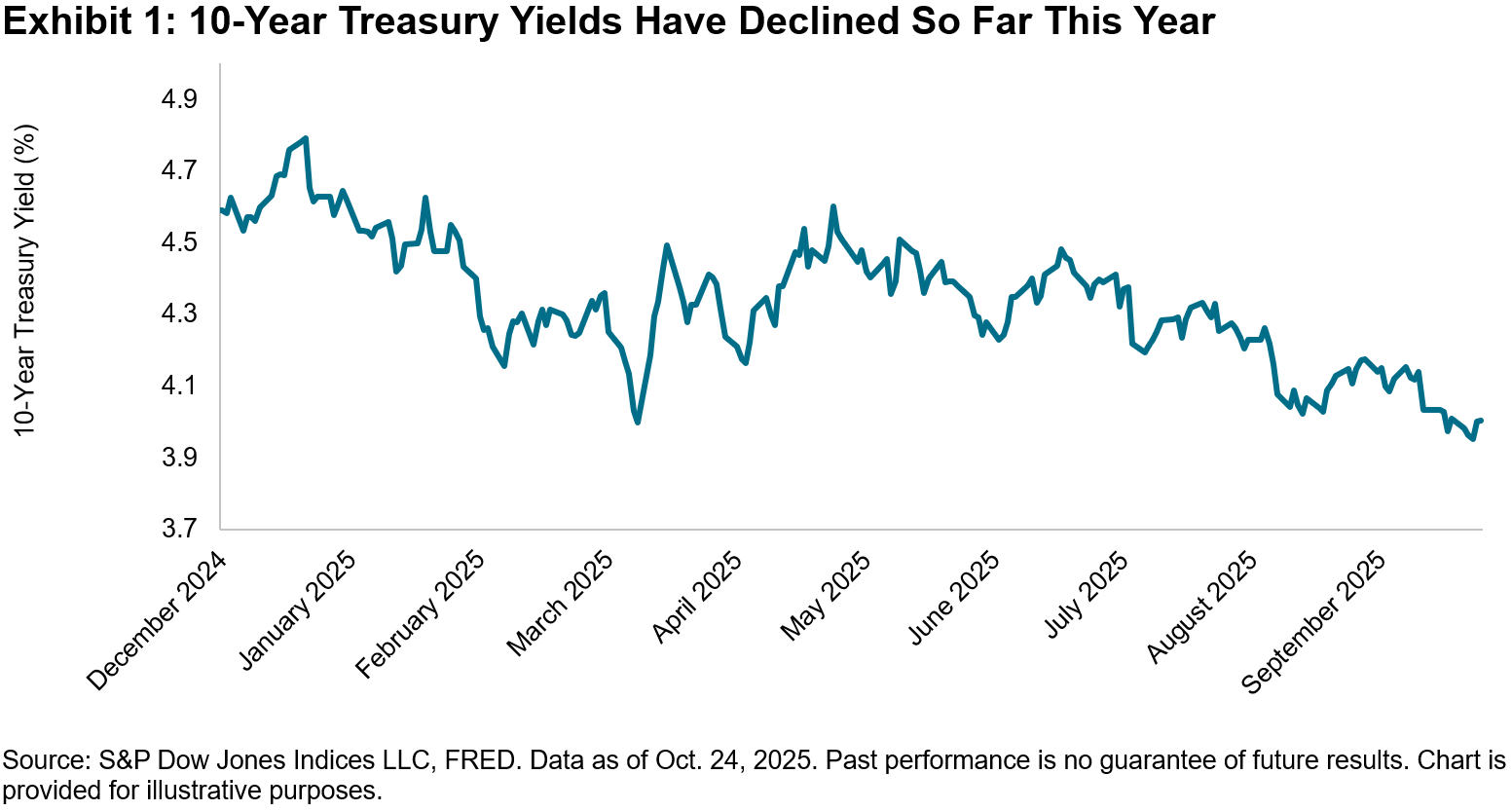
Turning to the fixed income markets, the closely watched 10-year U.S. Treasury yield has declined so far this year, falling below the 4% handle, thanks to optimism surrounding potential upcoming Fed rate cuts and expectations of an end to quantitative tightening, better-than-expected inflation results and increased safe-haven demand amid corporate credit concerns and a government shutdown.
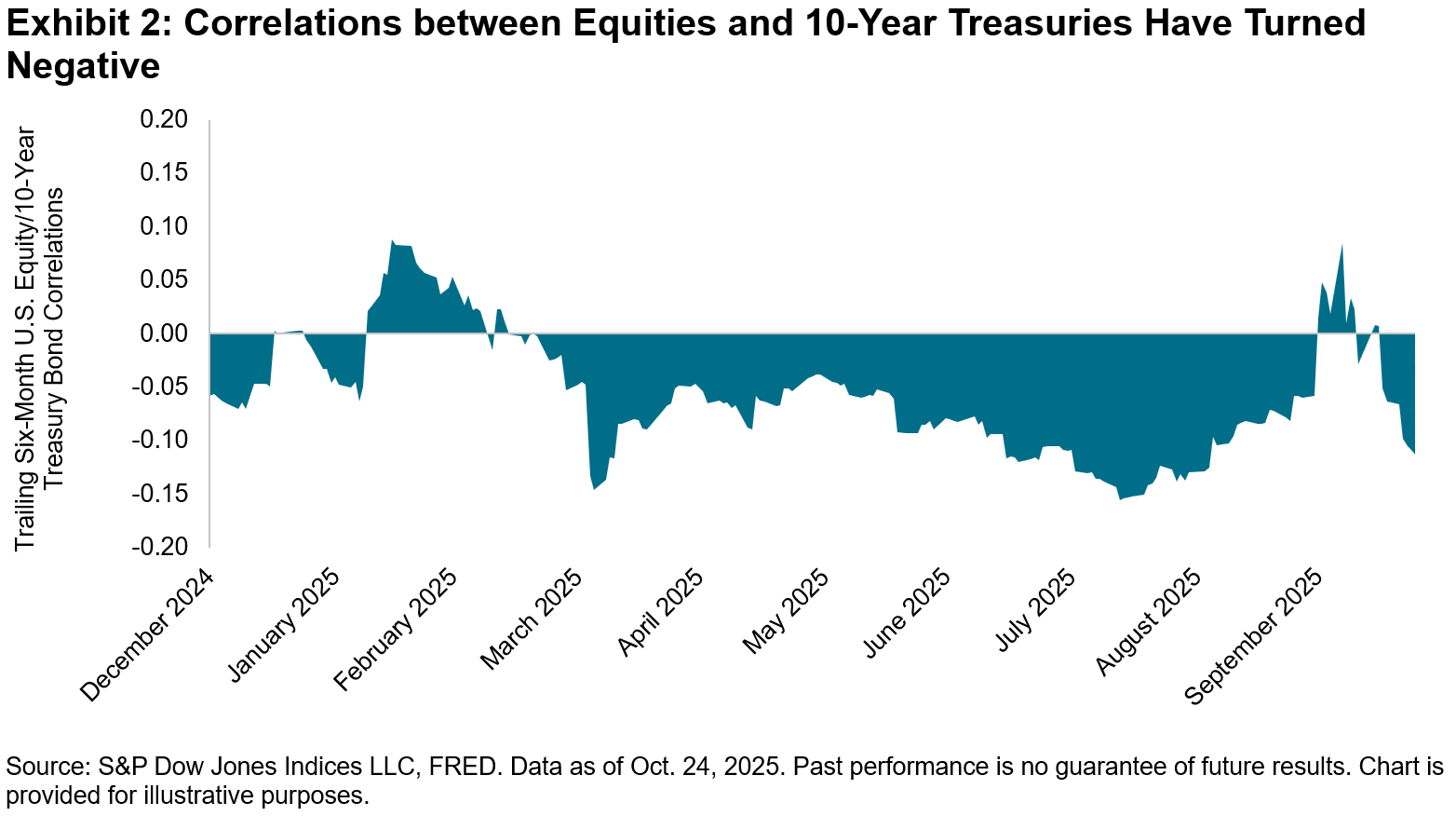
So how can market participants think about diversification and risk reduction in this shifting market environment? We began by analyzing the interaction of equities versus bonds, calculating the historical six-month correlations of the returns of the S&P 500 versus the S&P U.S. Treasury Bond Current 10-Year Index. After having witnessed negative correlations since the early April market tumult, when equities plummeted and market participants sought the refuge of Treasuries, correlations briefly turned positive but recently reversed again into negative territory, showing diversification potential across the two asset classes. 
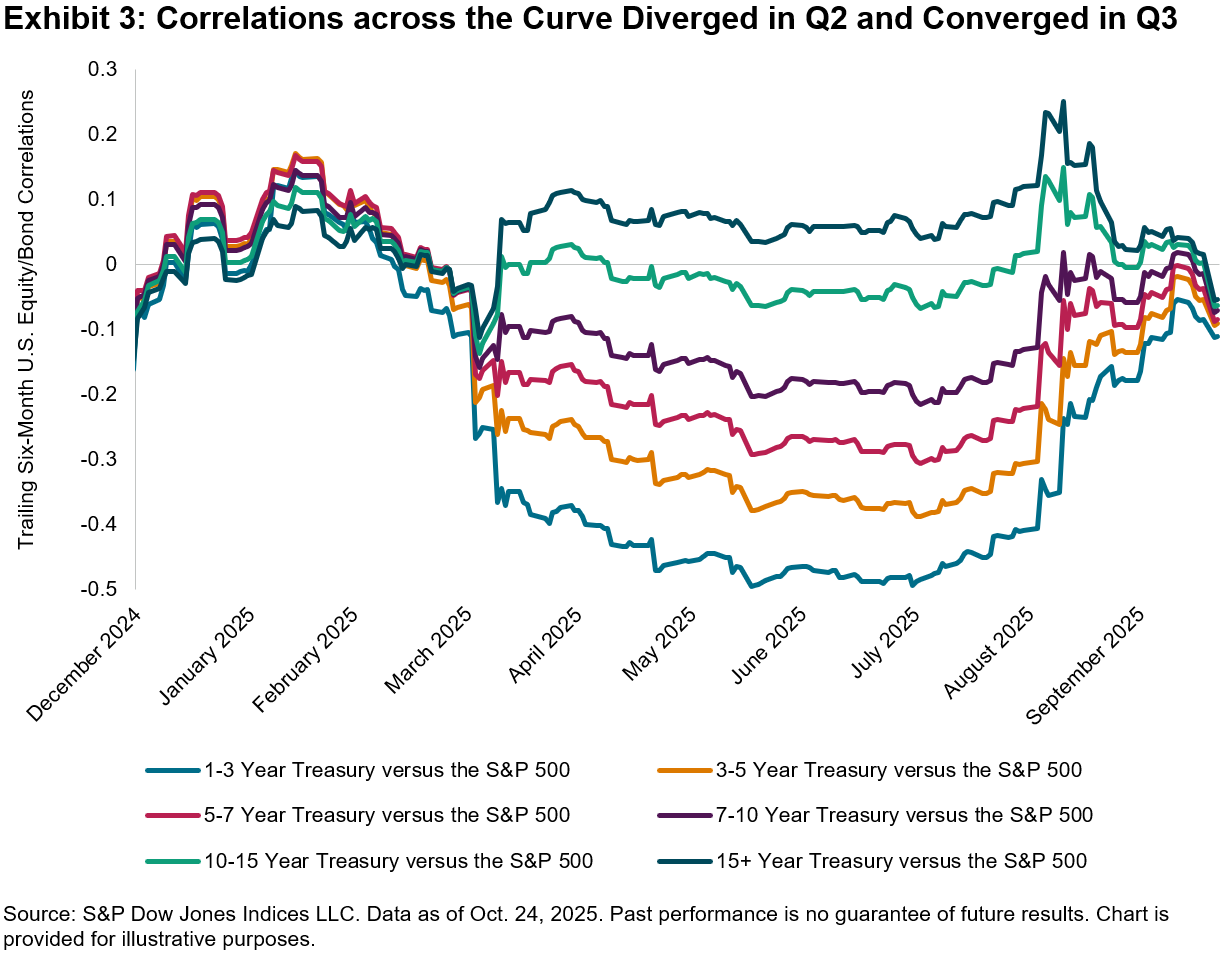
However, for a more nuanced perspective of the relationship between equities and fixed income, analyzing bonds across various durations or interest rate sensitivities may be helpful. Next, we calculated correlations of S&P 500 performance across the entire Treasuries curve, from 1-3 year to 15+ year maturities, using our suite of iBoxx $ Treasuries indices.

We observed that from April to September, there was a wide divergence across correlations, with longer-term Treasuries providing less diversification compared to short-term Treasuries, which had consistently lower correlations versus equities. Although these correlations have since converged, the diversification benefits of equities versus bonds can vary depending on which part of the curve Treasuries are situated in. 
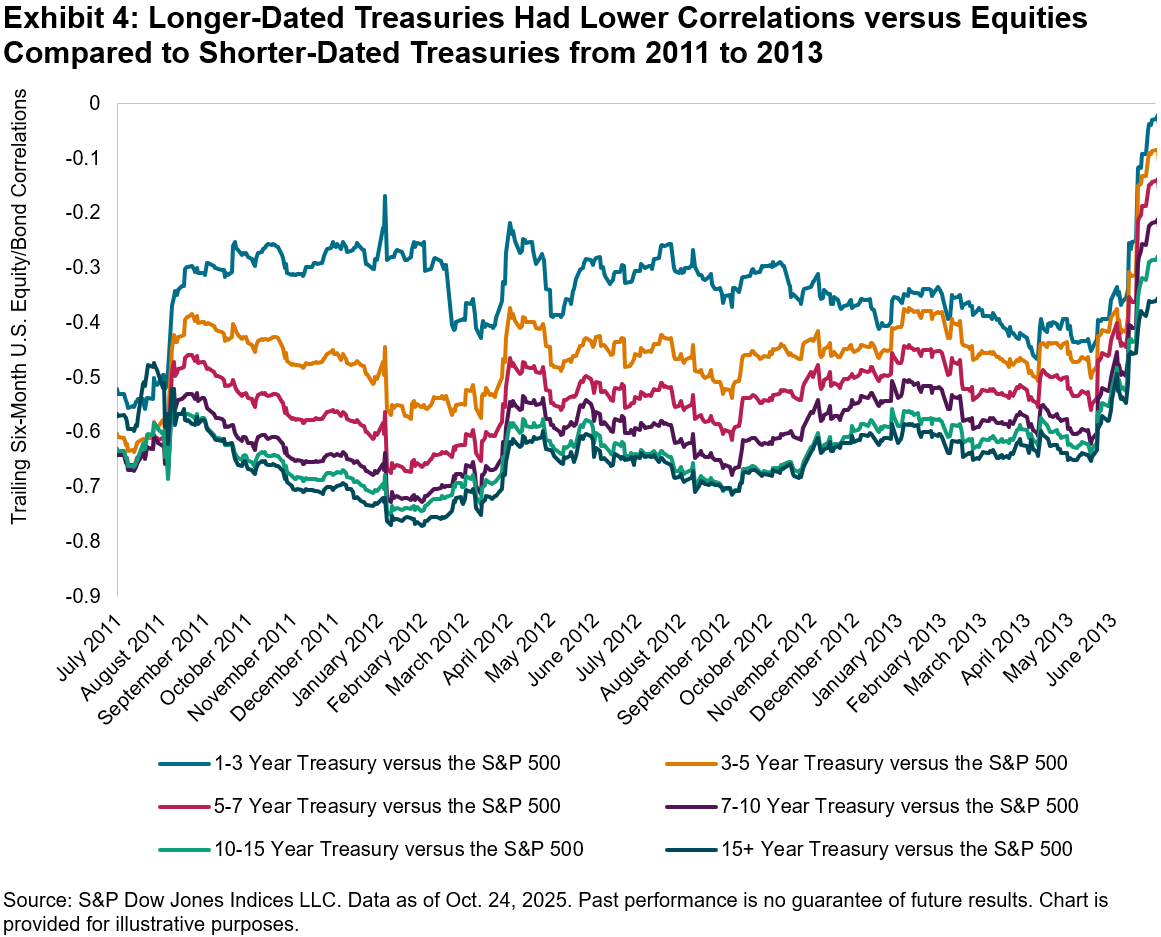
Another example of when correlations between equities and bonds varied across the Treasuries curve was from August 2011 to May 2013, characterized by momentous events like the European debt crisis, when market participants sought safe havens like Treasuries, and the Fed’s “Operation Twist,” which involved selling shorter-dated Treasury debt and buying longer-dated debt. During this period, however, shorter-dated Treasuries provided acted as less of a diversifier, with higher relative correlations to equities compared to longer-duration bonds.
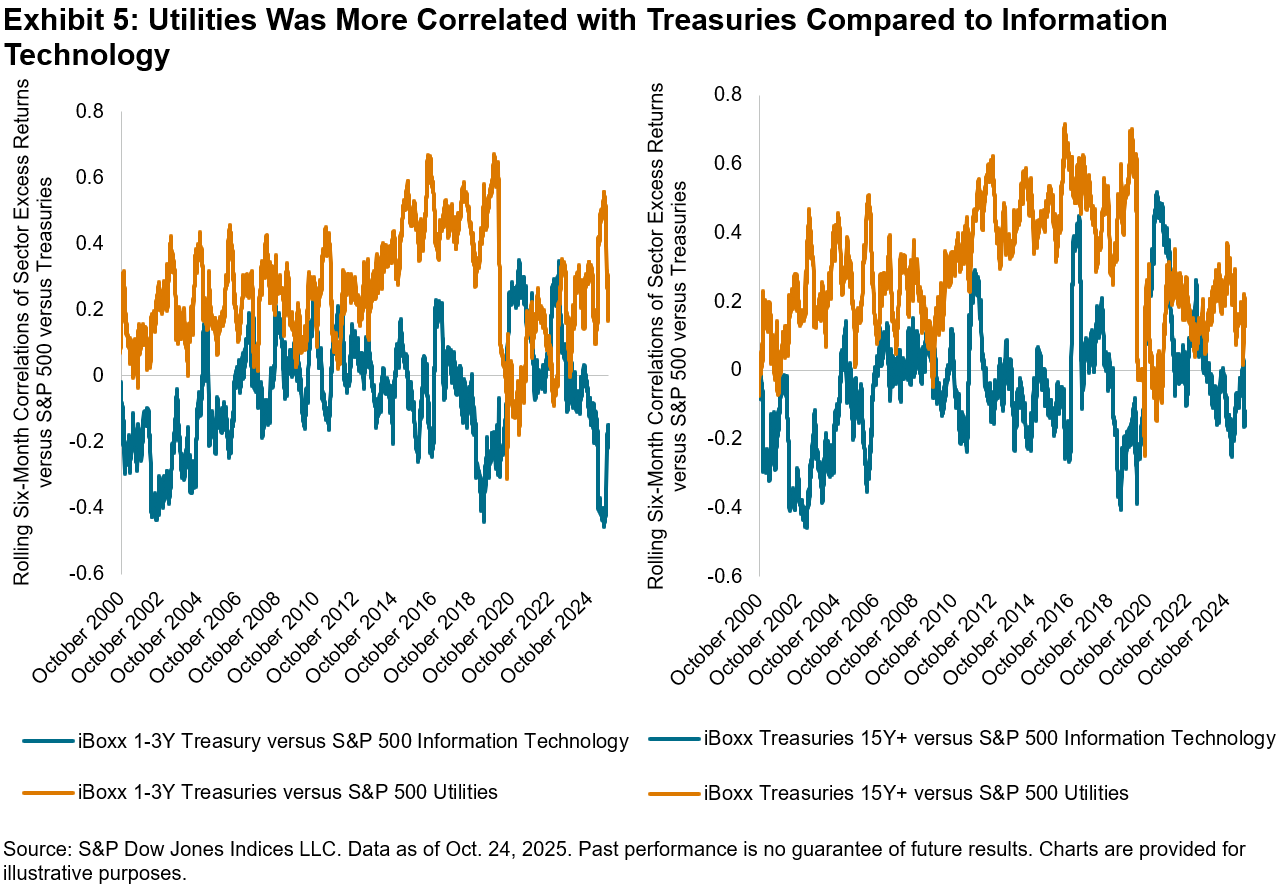
For an even more granular perspective across equities, we can compare the correlations of Treasuries across durations versus individual sectors. Sampling classically cyclical Information Technology and traditionally defensive Utilities, Exhibit 5 displays the historical six-month correlations of the excess returns of S&P 500 Information Technology and S&P 500 Utilities versus the iBoxx $ Treasuries 1-3 Year and iBoxx $ Treasuries 15 Years+. Unsurprisingly, Utilities generally exhibited a stronger correlation with short and longer-duration bonds compared to Information Technology, which, given the tech-heavy nature of the large-cap equity market, may indicate that the diversification ballast offered by bonds may be particularly germane in the current market regime.
Understanding equity movements versus bonds, both across the duration spectrum and across sectors, may be especially relevant as we anticipate the Fed’s upcoming rate decision and Big Tech earnings this week, and as the beginning of Q4 approaches.

1 https://www.wsj.com/finance/stocks/why-bubbles-can-keep-inflating-in-plain-sight-a4af6aef?mod=finance_lead_pos2

The posts on this blog are opinions, not advice. Please read our Disclaimers.

Why Does Index Liquidity Matter?

Explore how the equity and fixed income trading ecosystems are evolving in response to the continued growth of assettracking indices and what it could mean for investors with S&P DJI’s Tim Edwards and Anu Ganti. 

The posts on this blog are opinions, not advice. Please read our Disclaimers.
Looking at Trends in the S&P UBS Leveraged Loan Index

Contributor Image
Eric Pettinelli

Fixed Income Specialist, Index Investment Strategy

S&P Dow Jones Indices

Leveraged loans are playing an increasingly prominent role within the high yield landscape, with data from S&P Dow Jones Indices showing that the U.S. leveraged loan market has grown from nearly USD 400 million to USD 1.5 trillion over the last decade.1 The expansion of the broader loan ecosystem has naturally increased the importance and relevance of indices measuring performance and serving as category benchmarks, creating the potential for index-linked products and derivatives based on the S&P UBS Leveraged Loan Index Series.

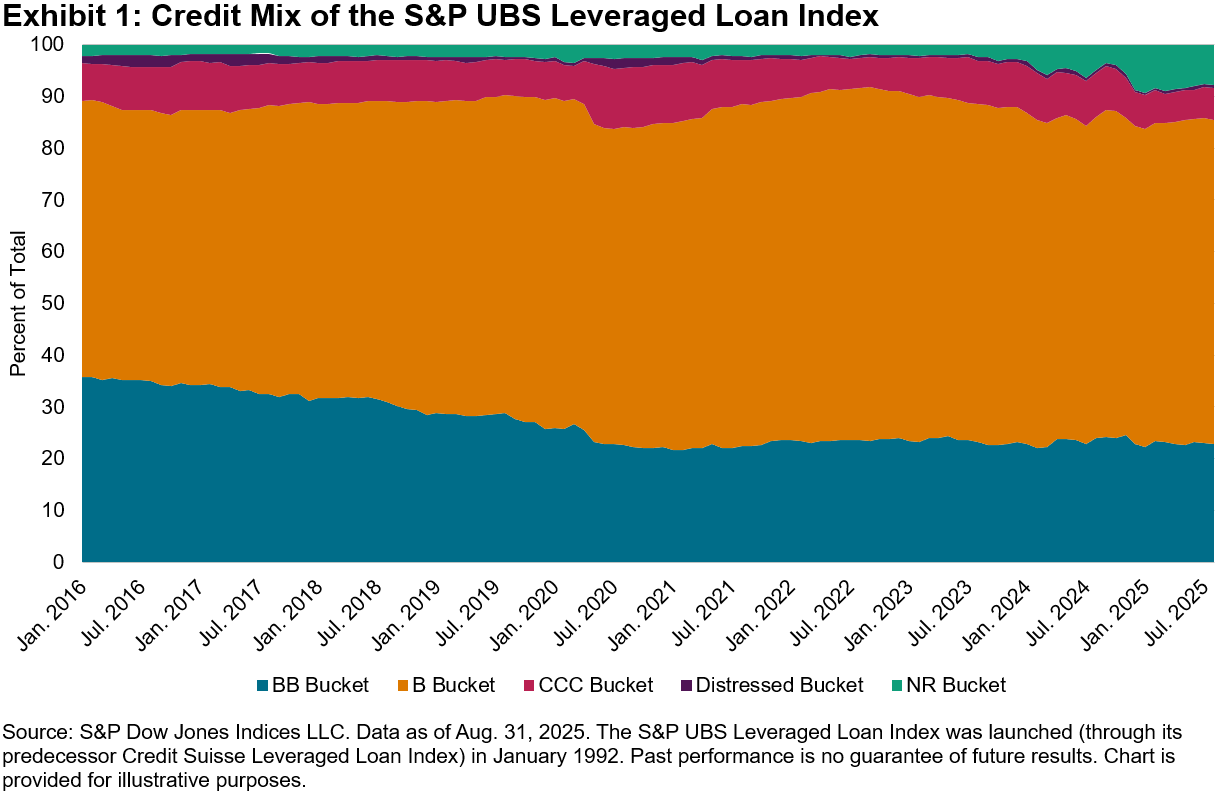
Offering a broad benchmark for the U.S. loan market, the S&P UBS Leveraged Loan Index tracks USD-denominated leveraged loans with a credit rating below investment grade or, for unrated loans, with a spread of 125 bps above their reference rate.2 The index rebalances at the end of every month to account for new loans, continually reflecting changes in underlying credit risk and interest rate spreads. When it comes to credit risk, as shown in Exhibit 1, there has been a shift of over 10% from BB rated loans to B rated loans over the last decade.

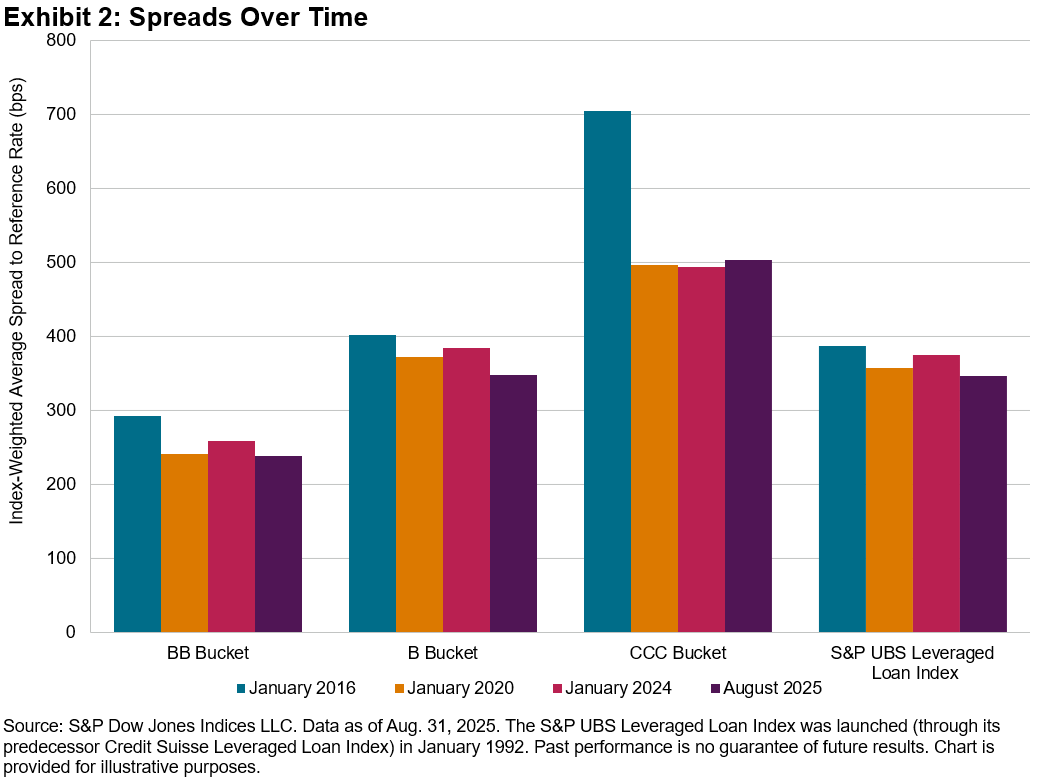
The index also reflects how interest spreads (above the reference rate) have drifted downward over time as the leveraged loan market has grown. The index-weighted average spread of the S&P UBS Leveraged Loan Index declined (or compressed) over the period shown in Exhibit 1—both at the overall level and within each credit bucket—as shown in Exhibit 2.

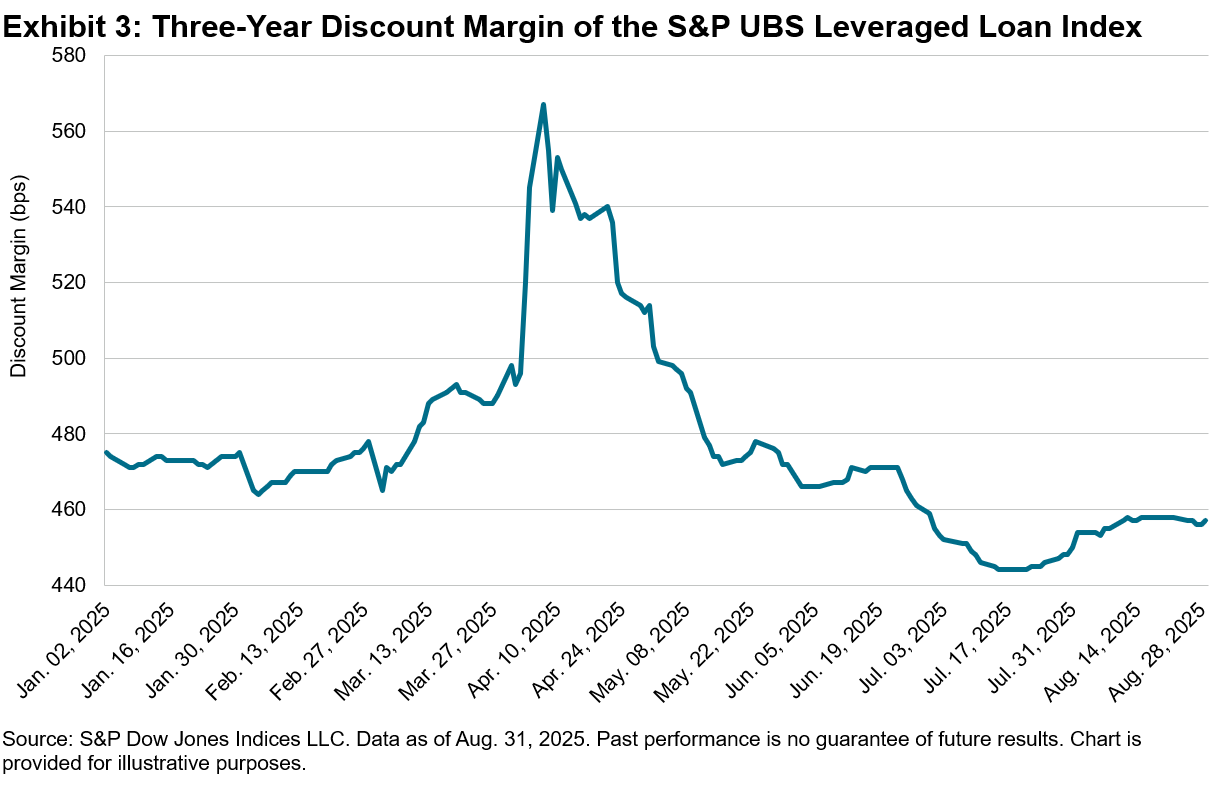
External forces also play a role in shaping the S&P UBS Leveraged Loan Index. Exhibit 3 shows the evolution of the index-weighted average three-year discount margin over the current year.3 The impact of the April 2025 tariff announcements and the accompanying economic and market uncertainty had the effect of sharply increasing the discount margin in April, but this was followed by a reversal and more, bringing the discount margin to new YTD lows over the summer.

The S&P UBS Leveraged Loan Indices have been an important measure of the evolving U.S. and European loan markets since the 1990s, enhancing transparency for market observers and participants. The indices will continue to support the market through loan benchmarking, performance measurement and the development of index-linked products. With the growing demand for indexing solutions in the leveraged finance sector, the S&P UBS Leveraged Loan Indices are poised to play an increasingly significant role in shaping market understanding.

1 See the S&P UBS Leveraged Loan Index Factsheet. Data as of Sept. 30, 2025.

2 The yield on each loan is composed of a reference rate plus a predetermined spread. The reference rate for each loan is typically a published money market interest rate that evolves over the period of the loan. Presently, the U.S. dollar SOFR (Secured Overnight Funding Rate) is typically used for new loans, but other reference rates may be used—especially historically.

3 The three-year discount rate for each loan, based on its current price, is the excess annualized yield (over the reference rate) that would result if that loan realized all future cash flow over an assumed three-year life. Accordingly, if the loan is currently trading at a price equal to its notional, the discount margin will equal the spread exactly. A lower price will result in a higher discount margin; a higher price results in a lower discount margin.

The posts on this blog are opinions, not advice. Please read our Disclaimers.
Navigating Market Cycles: The Complementary Roles of Quality and Momentum Indices

Contributor Image
Wenli Bill Hao

Director, Factors and Dividends Indices, Product Management and Development

S&P Dow Jones Indices

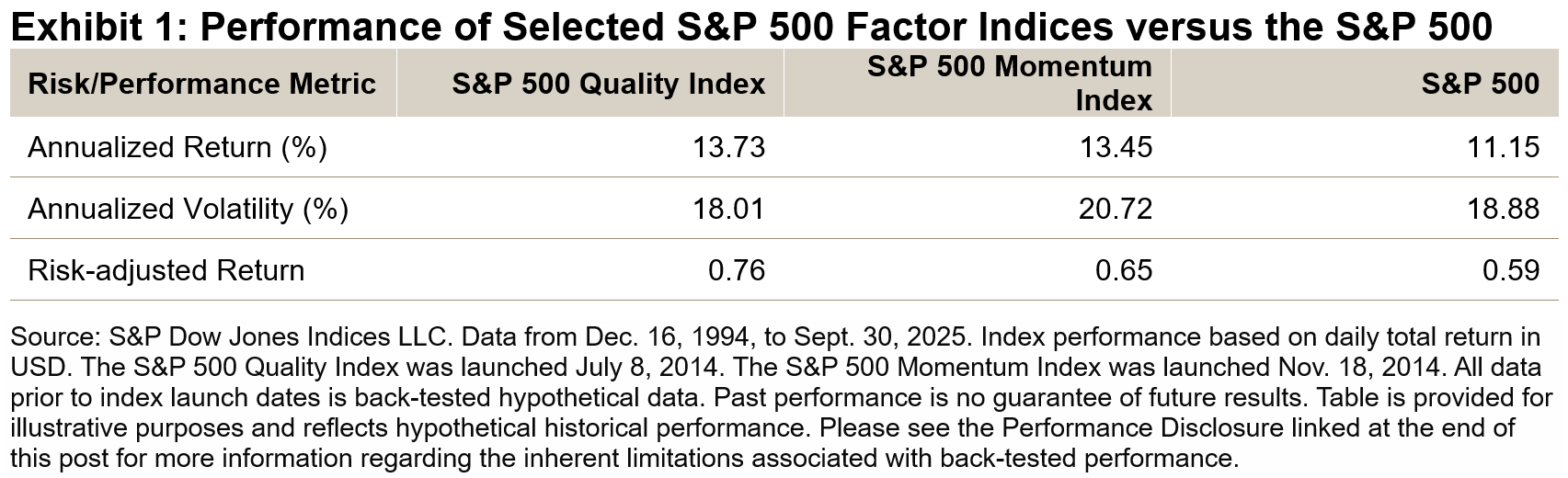
Over the long term, both the S&P 500® Quality Index and S&P 500 Momentum Index have outperformed the broader market (as measured by the S&P 500) in terms of absolute and risk-adjusted returns. The quality factor emphasizes financially strong and stable companies, while momentum tracks stocks with sustained price trends. When combined, these strategies create a complementary pairing that can enhance diversification across various market environments. In this blog, we will explore their methodologies, key characteristics and performance.

Methodology Overview

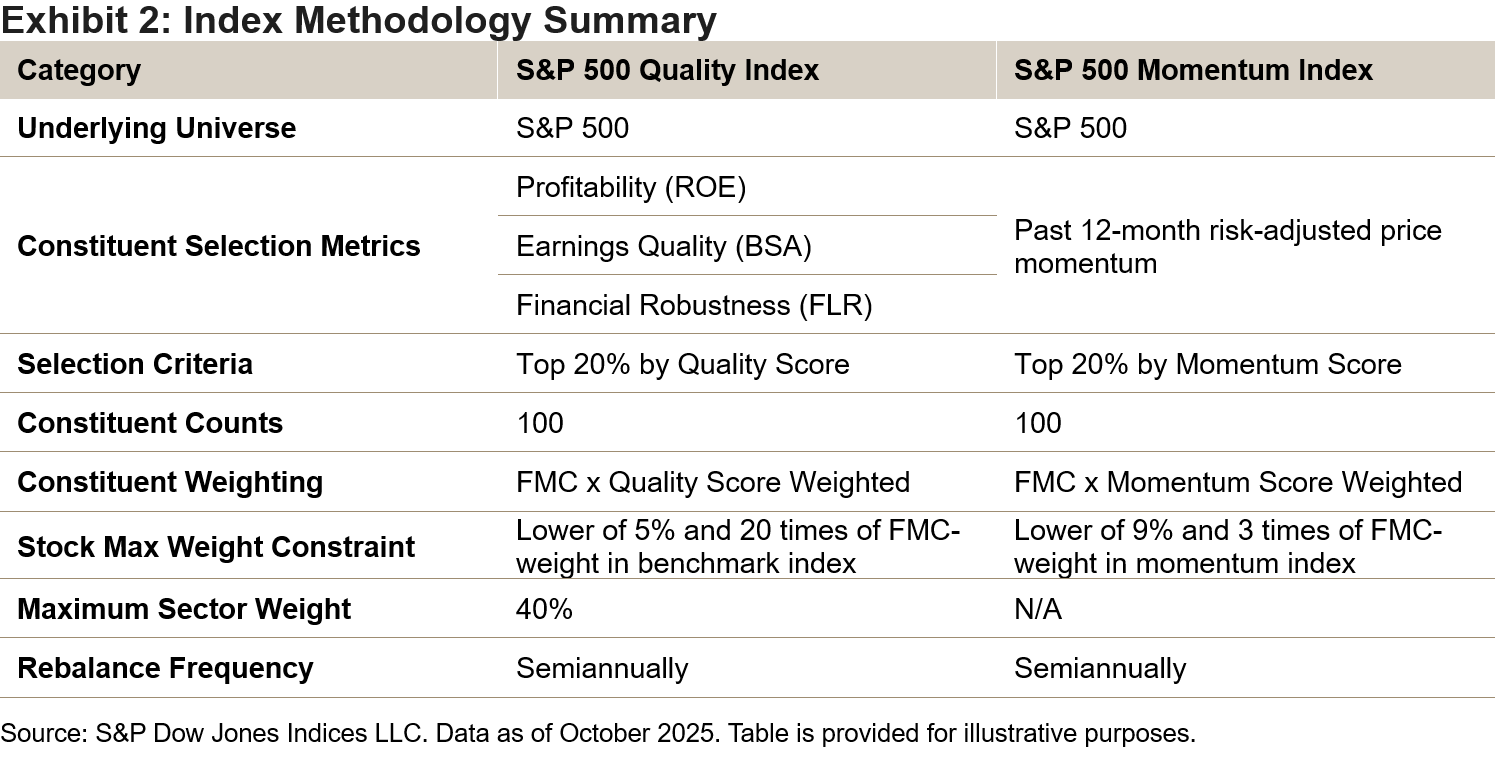
High quality is typically associated with a company’s strong profitability, high earnings quality and robust financial strength. To reflect these quality characteristics, the S&P Quality Indices1 utilize three key metrics: return on equity (ROE) to assess profitability, balance sheet accruals ratio (BSA)2 to evaluate earnings quality and financial leverage ratio (FLR) to measure debt-to-equity level (see Exhibit 2).

Momentum indices focus on securities that have recently demonstrated strong relative performance, positioning for their continued outperformance. The S&P Momentum Indices generally use 12-month risk-adjusted price momentum to select stocks ranked in the top quintile.3 To account for short-term reversal effects, the most recent month is skipped when calculating price momentum.4 The use of risk-adjusted momentum, instead of raw price momentum, may help to mitigate the negative effects of idiosyncratic risk associated with raw momentum and reduce downside risks.5

Quality and Momentum: Mutual Diversifiers

These factors can be complementary as they highlight distinct yet synergistic drivers of performance. Momentum focuses on market dynamics and investor sentiment, whereas quality is rooted in intrinsic financial strength. By combining these two factors, the resulting blend could strike a balance between performance potential and downside protection. Momentum tends to enhance performance in strong, trending markets, while quality offers stability during downturns.

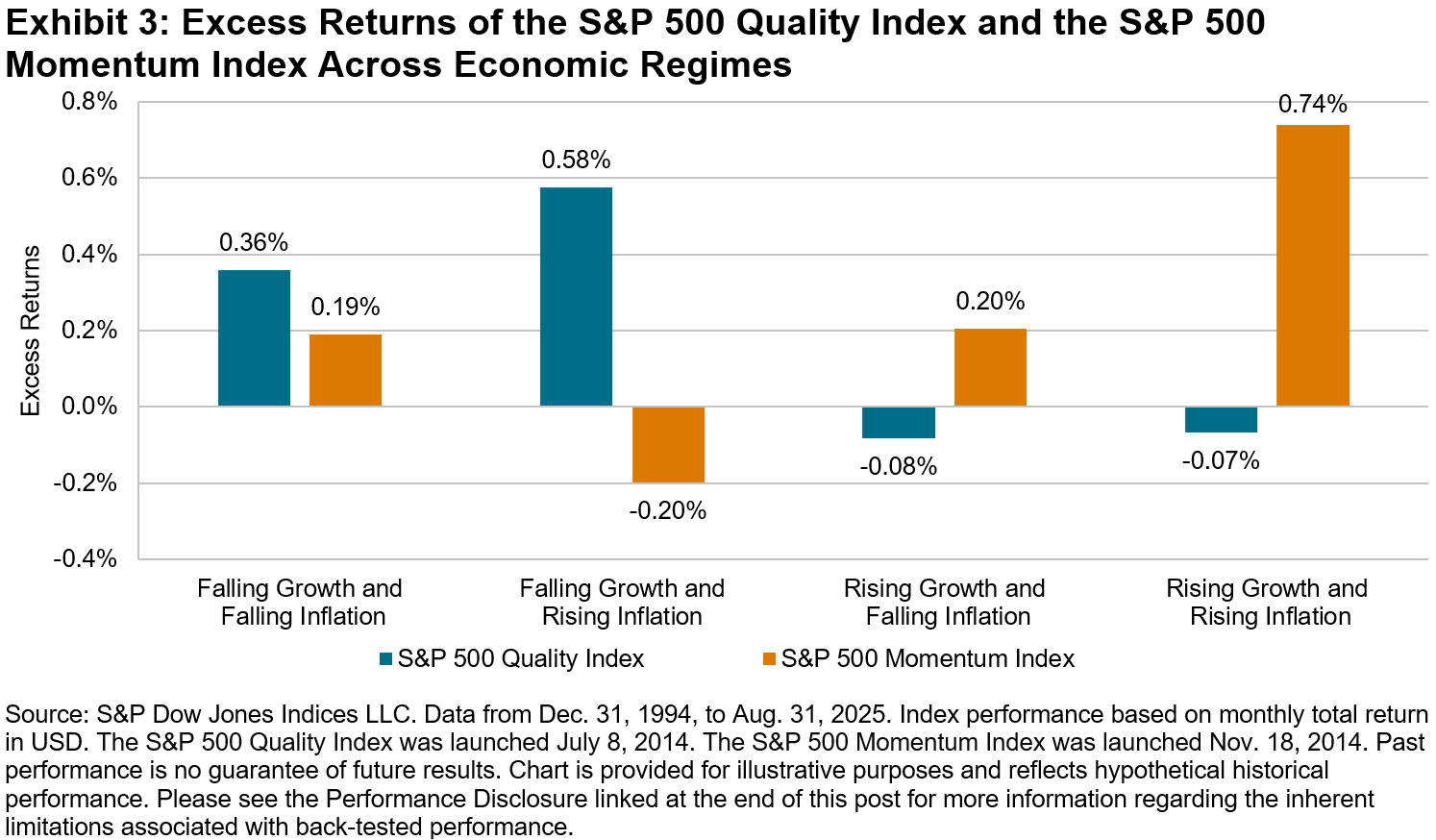
These characteristics are evident in their performances across various economic regimes6 (see Exhibit 3). The S&P 500 Quality Index has historically outperformed in Falling Growth regimes, while the S&P 500 Momentum Index has historically performed better in Rising Growth regimes. With a historically low excess return correlation of -0.07,7 the S&P 500 Quality Index and the S&P 500 Momentum Index tend to act as effective diversifiers for each other.

Combining Quality and Momentum: Potential for More Persistent Performance

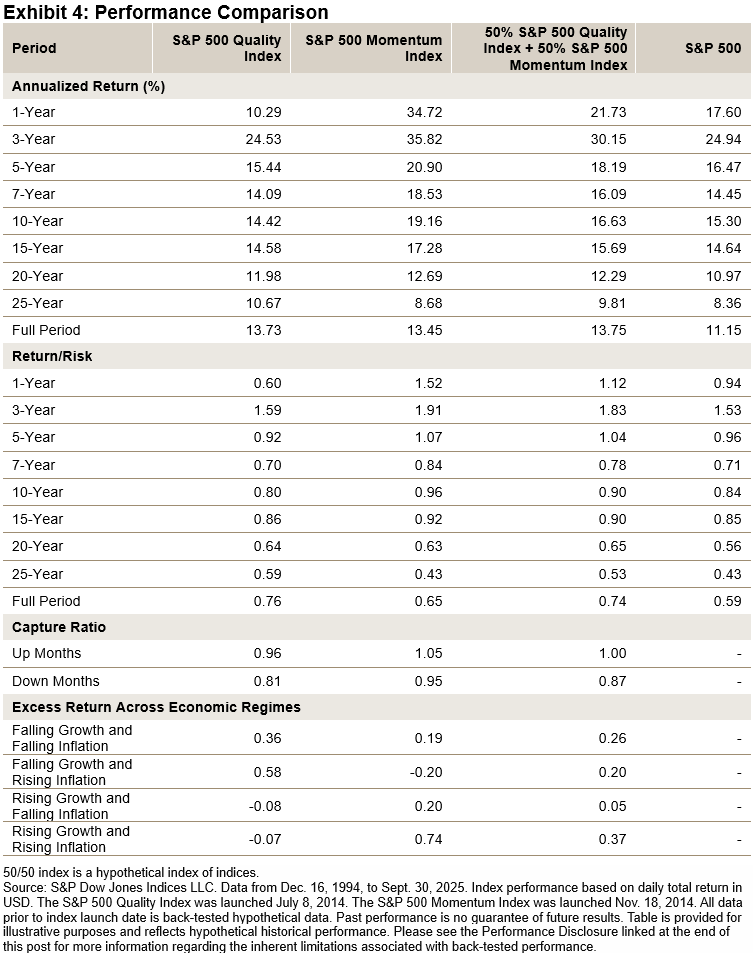
To illustrate the historical advantages of combining the S&P 500 Quality Index and the S&P 500 Momentum Index, we have created a hypothetical index of indices with equal weights of 50% assigned to each (referred to as the “50/50” index). This index is rebalanced semiannually at the end of June and December. As shown in Exhibit 4, the 50/50 has a few striking features.

More Persistent Historical Returns

The 50/50 index outperformed the broader S&P 500 on a more consistent basis, in both absolute and risk-adjusted terms across various short- and long-term horizons.

More Favorable Capture Ratios

Furthermore, the 50/50 index has exhibited more favorable capture ratios, achieving one-to-one returns during up markets8 while experiencing significantly smaller declines during down markets.

Outperformance across Historical Economic Regimes

Finally, the 50/50 index generated positive excess return across all economic regimes, while the S&P 500 Quality Index experienced negative excess returns in Rising Growth environments and the S&P 500 Momentum Index had negative excess return in the Falling Growth and Rising Inflation economic regime.

1 Please refer to the S&P Quality Indices Methodology for more details.

2 Richardson, Scott A., et al., “Accrual Reliability, Earnings Persistence and Stock Prices,” Journal of Accounting & Economics, Vol. 39, No. 3, September 2005.

3 Please refer to the S&P Momentum Indices Methodology for more details.

4 Jegadeesh, Narasimhan and Sheridan Titman, “Returns to Buying Winners and Selling Losers: Implications for Stock Market Efficiency,” The Journal of Finance, Vol. 48, No. 1, March 1993.

5 Fan, Minyou, et al., “Momentum and the Cross-section of Stock Volatility,” Journal of Economic Dynamics and Control, Volume 144, November 2022.

6 Hao, W. and Rupert Watts, “A Historical Perspective on Factor Index Performance across Macroeconomic Cycles”, S&P Dow Jones Indices, November 2024.

7 Correlation is calculated using monthly excess returns of the S&P 500 Quality Index and the S&P 500 Momentum Index versus the S&P 500, respectively, from Dec. 31, 1994, to Aug. 31, 2025.

8 The market is defined as the monthly performance of the underlying benchmarks from Dec. 31, 1994, to Aug. 31, 2025.

The posts on this blog are opinions, not advice. Please read our Disclaimers.
Examining the S&P 500 High Dividend Index amid Changes in Monetary Policy

Contributor Image
George Valantasis

Director, Factors and Dividends

S&P Dow Jones Indices

Whether it’s the beginning of the school year or the drop in temperatures, September is often seen as a month of change. This year, there’s an additional factor reinforcing this idea: on Sept. 17, 2025, the U.S. Federal Reserve reduced the Fed Funds rate to 4.00%-4.25%, representing the first change in monetary policy since late 2024. With this rate cut and the market pricing further cuts before the end of the year, high-dividend-yielding strategies like the S&P 500® High Dividend Index may garner increased interest among market participants.

Alongside the supportive monetary policy, the S&P 500 High Dividend Index currently exhibits both a significant valuation and a dividend yield advantage compared to the S&P 500. This blog will explore these factors, delve into long-term performance—especially during historical drawdown events—and examine the current sector weights in relation to The 500™.

Performance Comparison

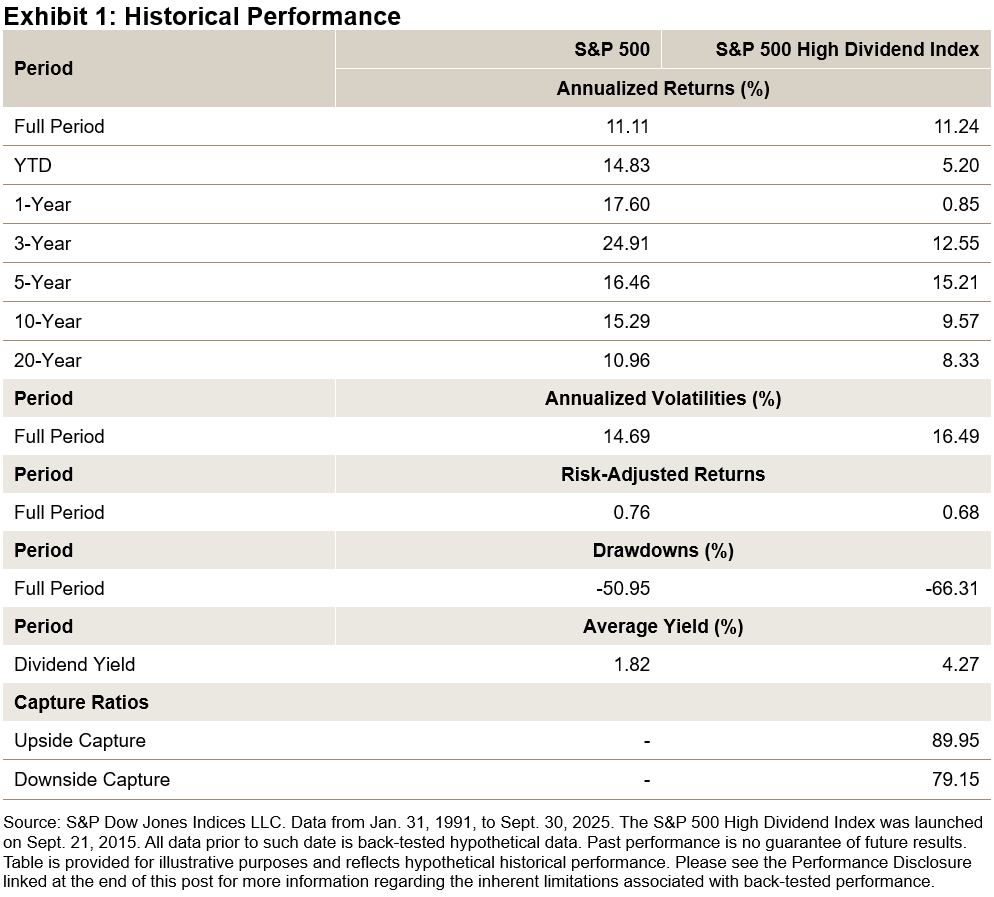
Exhibit 1 presents back-tested historical performance dating back to January 1991. Across the period studied, the S&P 500 High Dividend Index outperformed The 500 by 13 bps, with returns of 11.24% compared to 11.11%, albeit with higher volatility. Notably, despite this increased volatility, the S&P 500 High Dividend Index had capture ratios below 100.

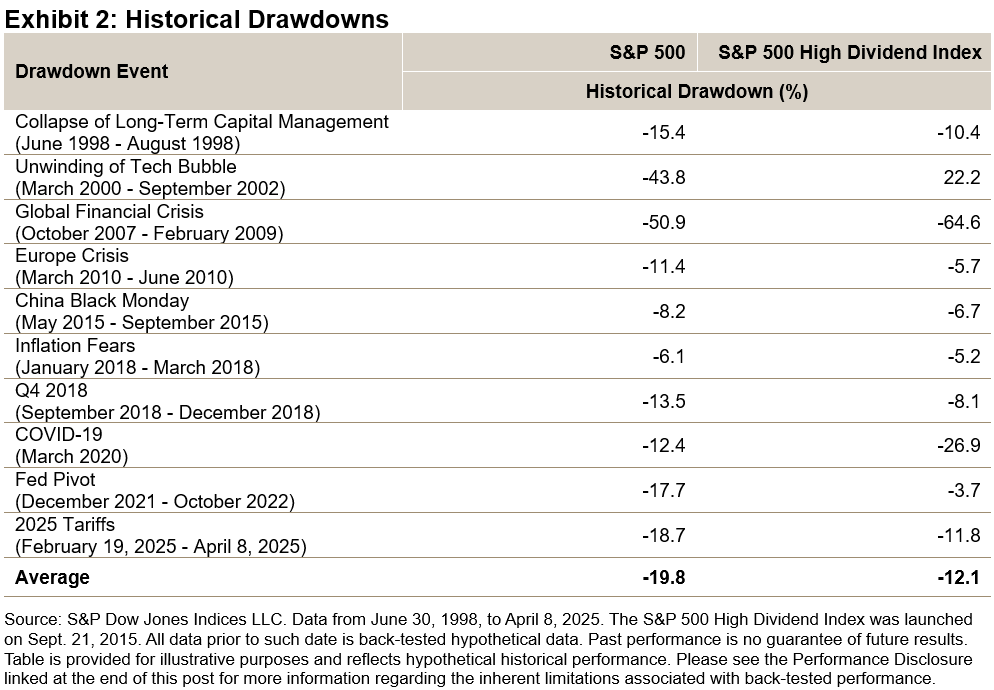
Exhibit 2 shows the performance of the S&P 500 High Dividend Index during 10 historical drawdowns since 1998. Although it underperformed during the Global Financial Crisis and the onset of the COVID-19 pandemic, the S&P 500 High Dividend Index outperformed The 500 in the other eight significant drawdown events over the full period. Across the 10 drawdowns, the S&P 500 High Dividend Index recorded an average return of -12.1%, while The 500 averaged -19.8%, meaning the former had an average outperformance of 7.7%.

Dividend Yield Comparison

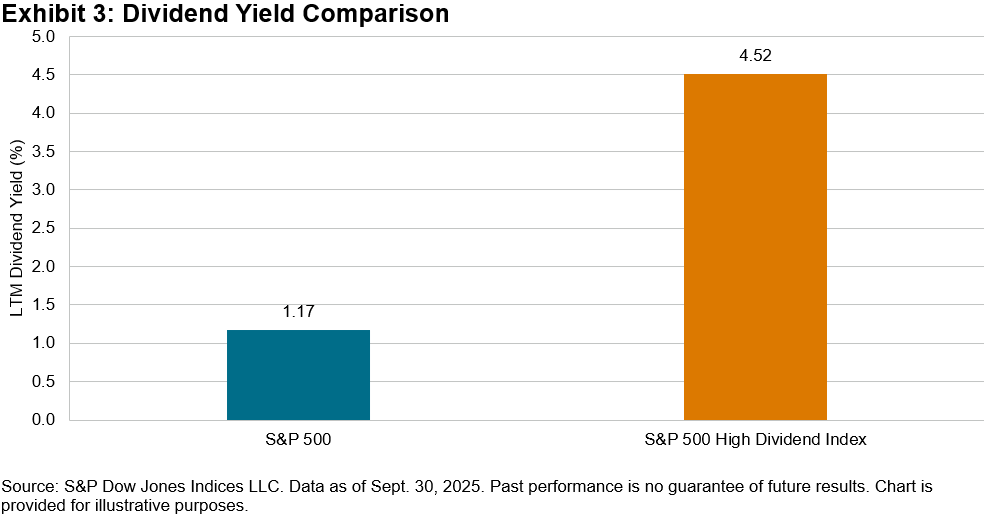
Exhibit 3 illustrates the current last 12 month (LTM) dividend yields for both the S&P 500 High Dividend Index and The 500. As of Sept. 30, 2025, the S&P 500 High Dividend Index offered a yield of 4.52%, while The 500 yielded 1.17%, showing a notable difference of 3.34%.

Valuation Comparison

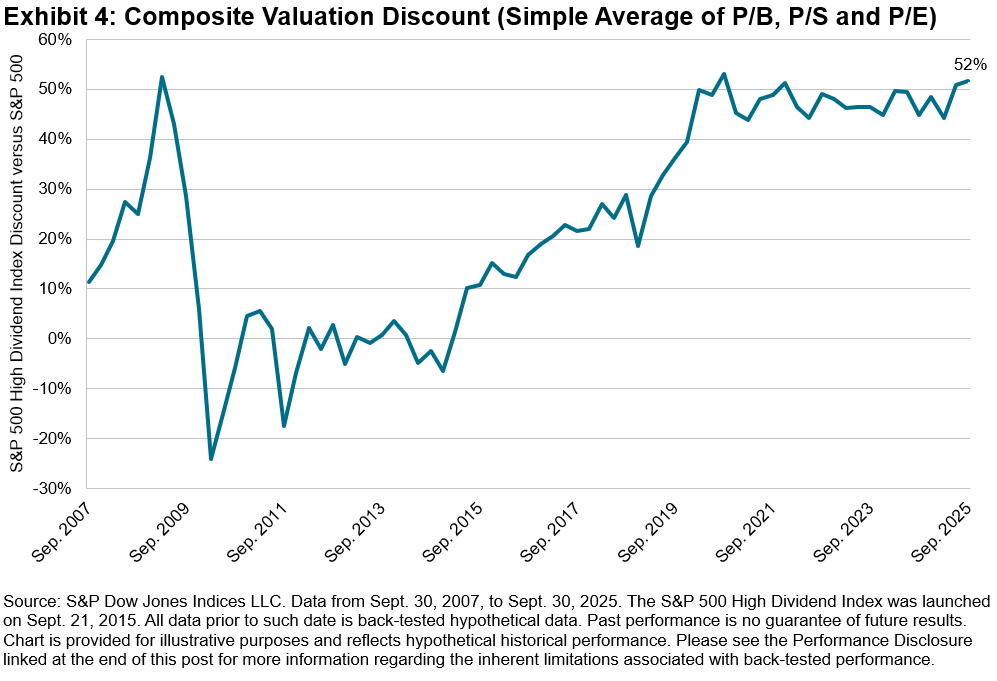
Exhibit 4 illustrates the composite valuation discount by employing a straightforward average of the price-to-book, price-to-sales and price-to-earnings ratios of the S&P 500 High Dividend Index in comparison to The 500. As of Sept. 30, 2025, the S&P 500 High Dividend Index was trading at a 52% discount, reflecting discounts of 65%, 58% and 32% on a price-to-book (P/B), price-to-sales (P/S) and price-to-earnings (P/E) basis, respectively. The 52% composite discount placed it in the 97th percentile of relative cheapness since 2007.

Sector Comparison

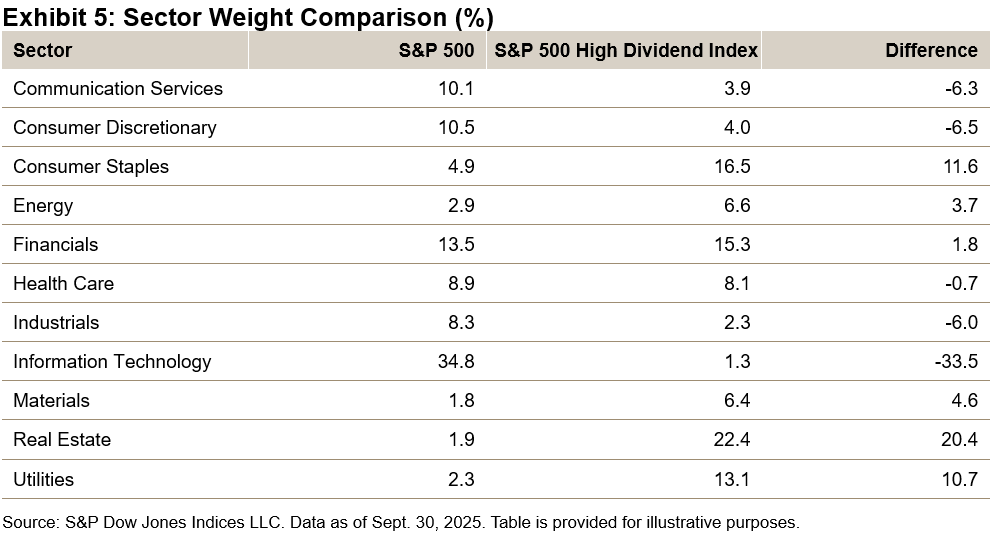
Exhibit 5 displays the current sector weights for The 500 and the S&P 500 High Dividend Index. The S&P 500 High Dividend Index demonstrates a notable underweight of 33.5% in the Information Technology sector. This underweight is counterbalanced by substantial overweights in the Real Estate, Consumer Staples and Utilities sectors, which have overweights of 20.4%, 11.6% and 10.7%, respectively.

Conclusion

The S&P 500 High Dividend Index may be of particular interest amid the easing monetary policy backdrop due to its historically favorable valuation and dividend yield relative to the S&P 500. The index’s relative valuations and high dividend yield are notable characteristics, particularly in the context of ongoing concerns about elevated valuations, low yields and concentration in broader benchmarks.

The posts on this blog are opinions, not advice. Please read our Disclaimers.