







































Get Indexology® Blog updates via email.

In This List

Examining Equal Weight Performance in Challenging Markets

20 Years at the Forefront of Dividend Indexing: The S&P 500 Dividend Aristocrats

How Have the S&P/BMV IPC Leverage and Inverse Indices Performed in Volatile Periods?

The Factors Fueling the Rise of Indexing in Wealth Management

Two Decades of Dividends: A Macro Look at S&P High Yield Dividend Aristocrats

Examining Equal Weight Performance in Challenging Markets

How have the S&P 500 Equal Weight Index’s exposures influenced its performance over time and why could that matter in the current climate? S&P DJI’s Anu Ganti and Invesco’s Nick Kalivas explore the growing ecosystem and key performance drivers of the S&P 500 Equal Weight Index.


The posts on this blog are opinions, not advice. Please read our Disclaimers.

20 Years at the Forefront of Dividend Indexing: The S&P 500 Dividend Aristocrats

Contributor Image
George Valantasis

Director, Factors and Dividends

S&P Dow Jones Indices

For two decades, the S&P 500® Dividend Aristocrats® has been holding its constituents to a high standard, requiring them to increase dividends for at least 25 consecutive years. This simple yet effective requirement has stood the test of time, establishing the index as one of the most recognized global dividend benchmarks. In honor of this anniversary, this blog will examine the index’s robust live performance, defensive characteristics and quality attributes as we celebrate this significant milestone.

Risk-Adjusted Outperformance

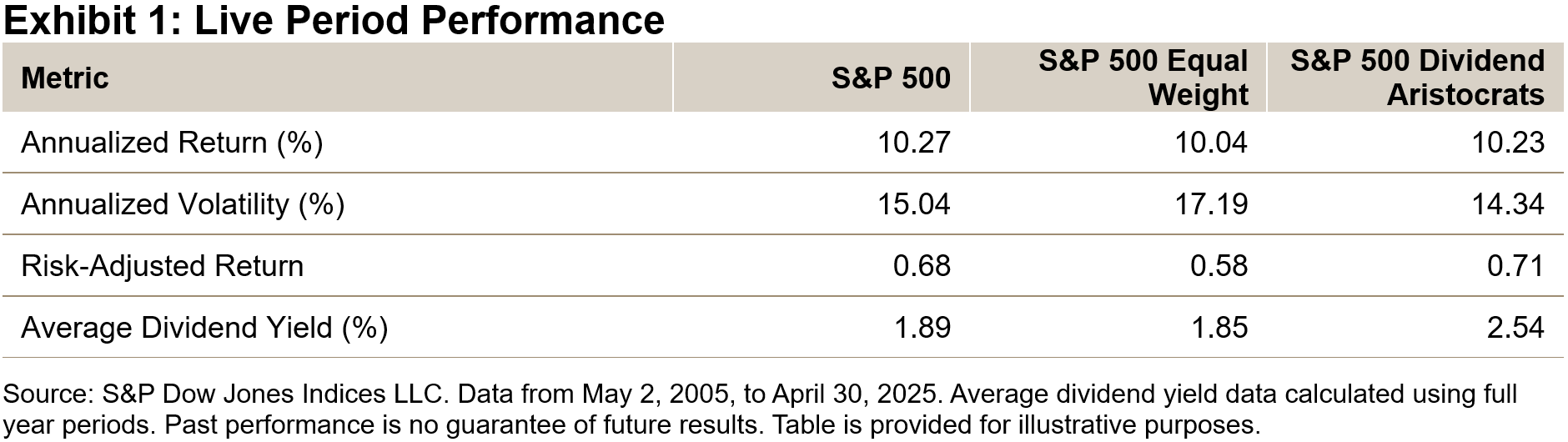
Exhibit 1 illustrates that the S&P 500 Dividend Aristocrats posted an annualized return of 10.23% over the 20-year period since its launch, aligning closely with benchmark performance. However, its annualized volatility of 14.34% during this timeframe was notably lower than that of the benchmark, leading to a risk-adjusted return of 0.73. Additionally, the average dividend yield for the index was 2.54%, surpassing the S&P 500’s yield of 1.89% and the S&P 500 Equal Weight’s yield of 1.85%.

Dividend Growth That Preserved Purchasing Power

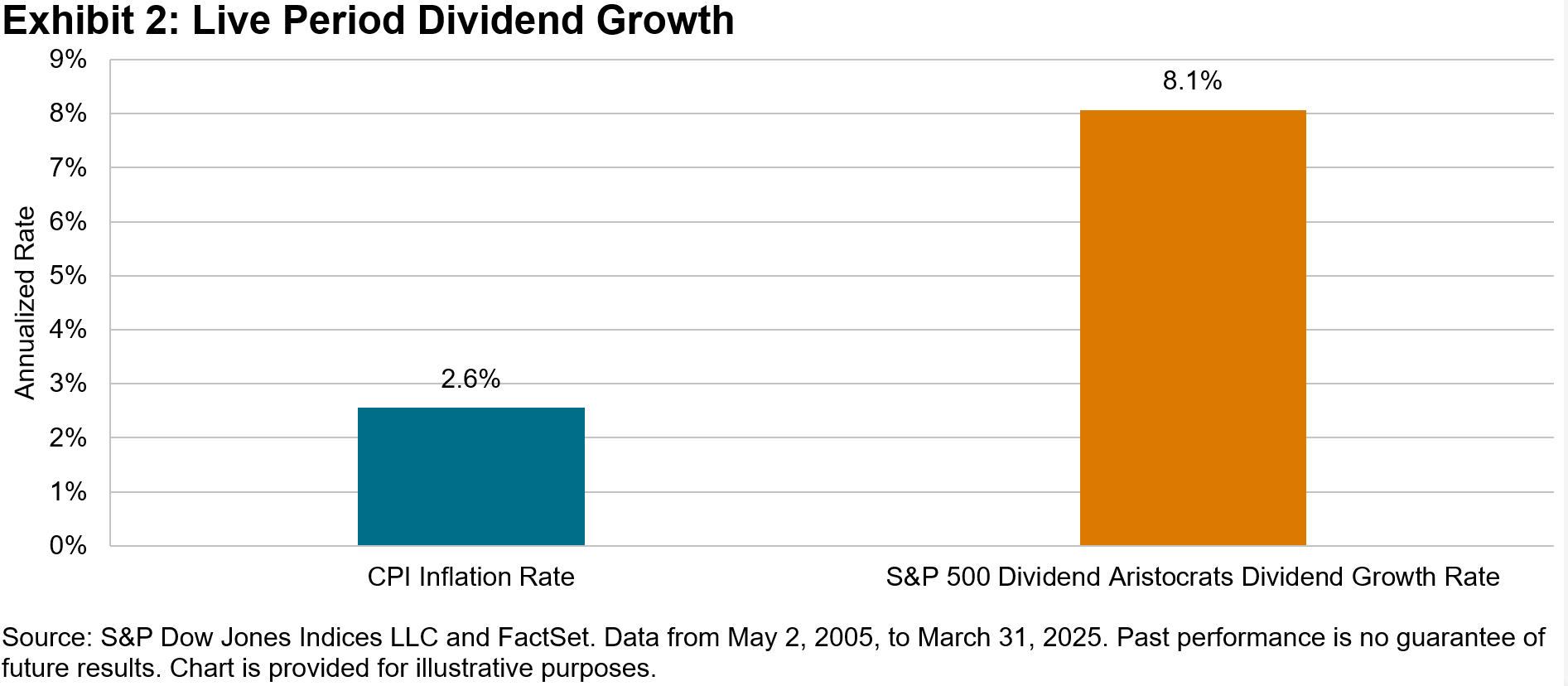
Exhibit 2 shows that the S&P 500 Dividend Aristocrats has preserved purchasing power over the long-term by comparing the dividend growth rate to the Consumer Price Index (CPI) rate. Over the 20-year live period, the S&P 500 Dividend Aristocrats achieved an annualized dividend growth rate of 8.1%, which is more than three times the 2.6% CPI rate for the same period.

Defensive Characteristics

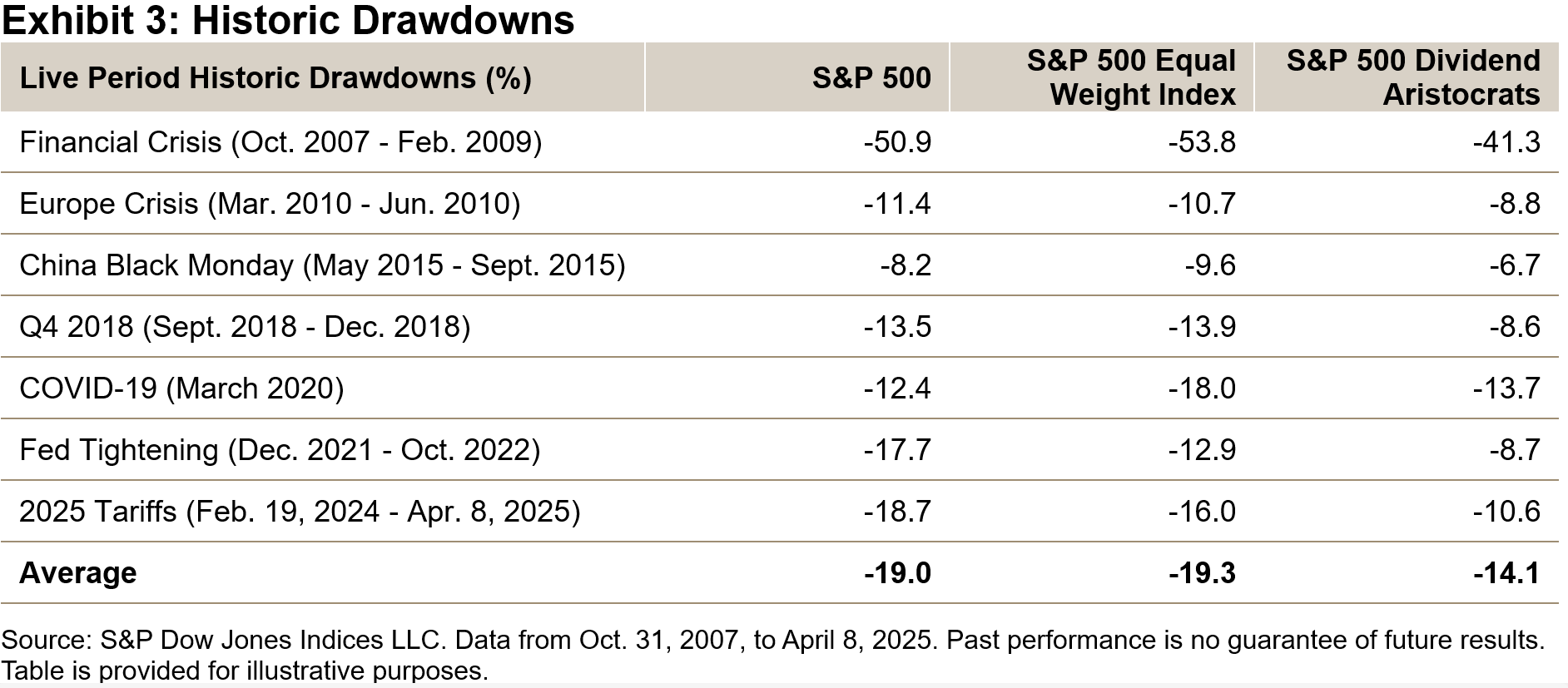
Exhibit 3 shows the consistent downside protection that the S&P 500 Dividend Aristocrats has historically provided during market drawdowns, with average drawdowns materially lower than those of the benchmark. Most recently, during the tariff-related drawdowns, the index outperformed The 500™ and S&P 500 Equal Weight Index by 8.2% and 5.4%, respectively.

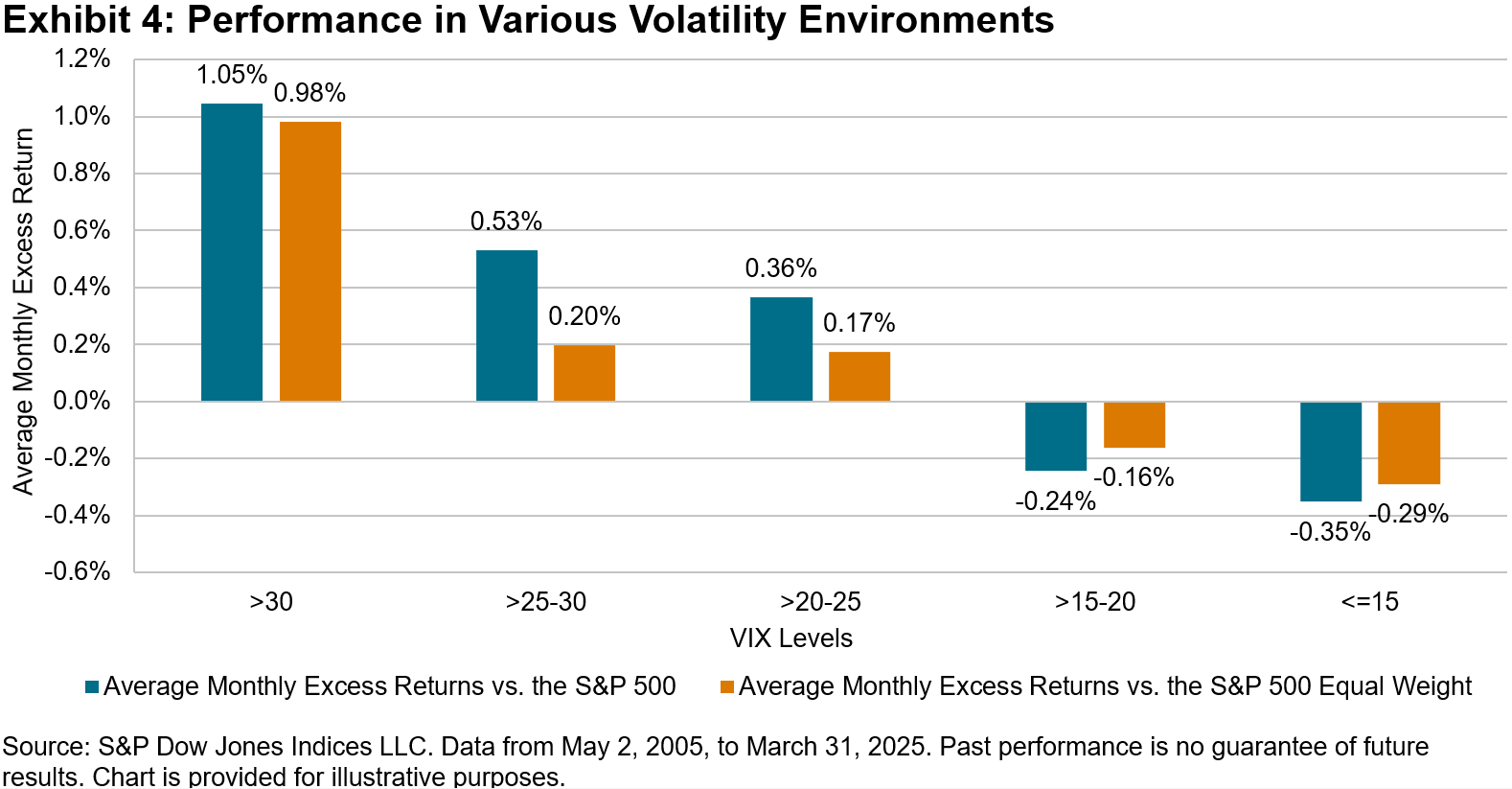
Exhibit 4 illustrates the performance of the S&P 500 Dividend Aristocrats relative to The 500 and the S&P 500 Equal Weight Index across various volatility environments. On average, the S&P 500 Dividend Aristocrats has significantly outperformed both benchmarks during periods of heightened market stress, specifically when VIX® levels exceed 20.

Higher Quality Constituents

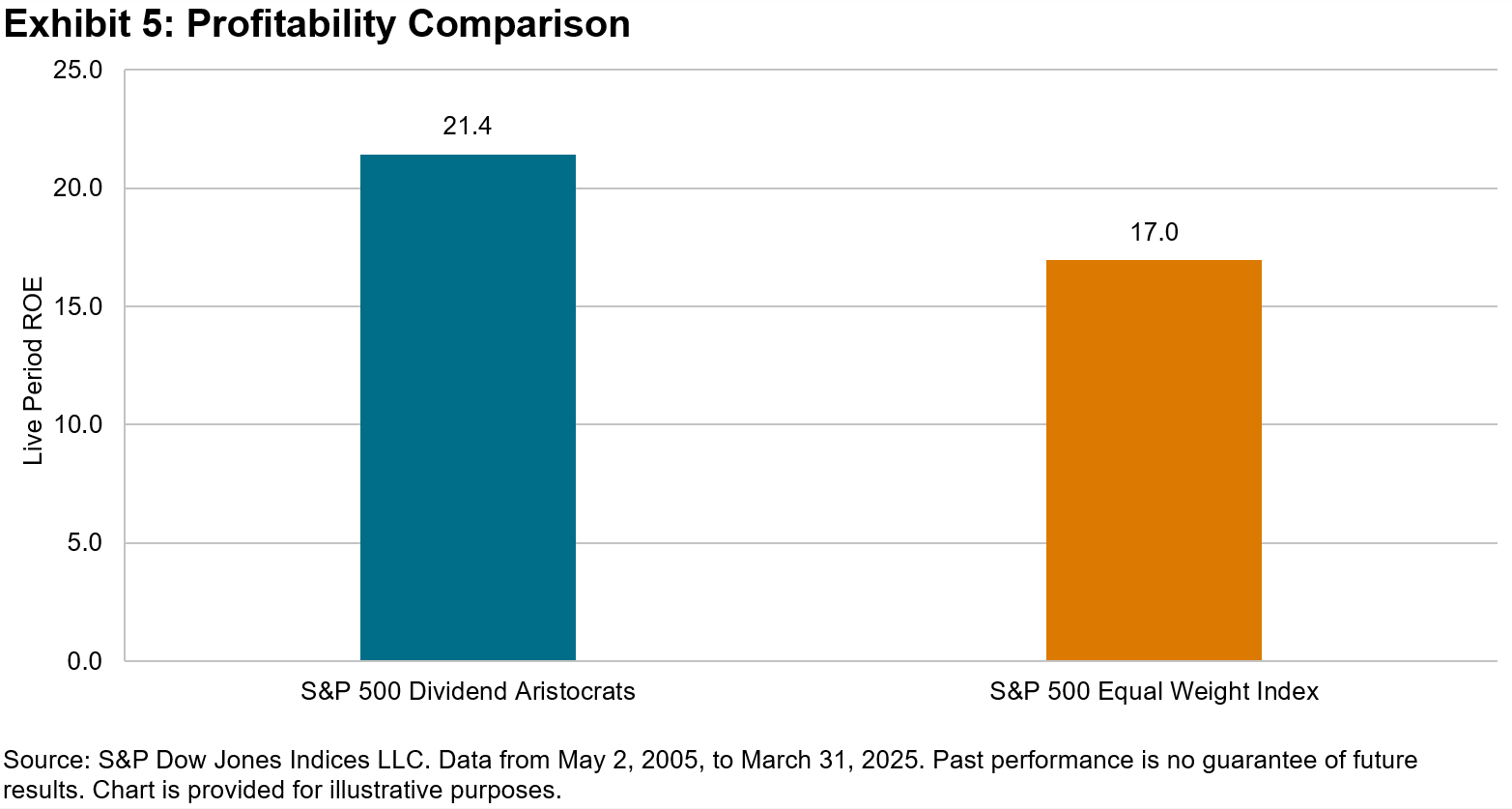
Highly profitable companies are typically better positioned to consistently increase dividends for shareholders over the long term, even in fluctuating economic conditions. As illustrated in Exhibit 5, constituents of the S&P 500 Dividend Aristocrats demonstrated superior profitability, with an average return on equity (ROE) of 21.4%, compared to 17.0% for the S&P 500 Equal Weight Index.

Conclusion

Even with 20 years of noteworthy performance under its belt, the S&P 500 Dividend Aristocrats is still relatively young compared to some of its constituents. Nonetheless, this milestone is significant for a dividend index and deserves celebration. We invite you to explore this standout index further in our paper, “Celebrating 20 Years of S&P 500® Dividend Aristocrats® with 20 Fun Facts.”

The posts on this blog are opinions, not advice. Please read our Disclaimers.
How Have the S&P/BMV IPC Leverage and Inverse Indices Performed in Volatile Periods?

Contributor Image
Eduardo Olazabal

Associate Director, Global Exchange Indices

S&P Dow Jones Indices

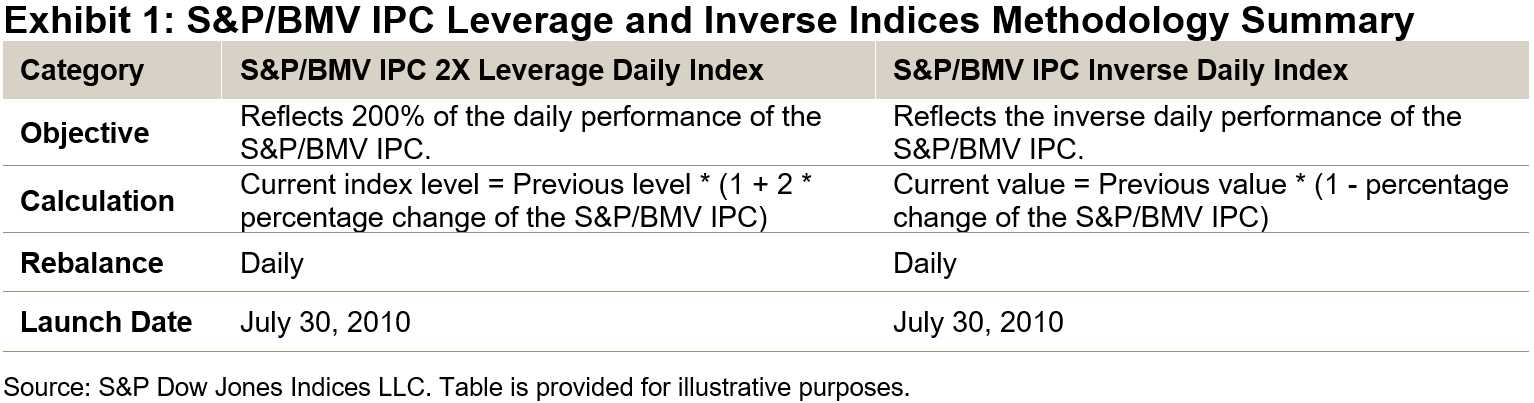
Leveraged and inverse indices are widely used by investors looking for a measurement that magnifies performance or hedges against market downturns. For the Mexican equity market, S&P DJI provides market participants with an amplified or inverse view of the S&P/BMV IPC through the S&P/BMV IPC 2X Leverage Daily Index and S&P/BMV IPC Inverse Daily Index, respectively (see Exhibit 1).1

Introduction to Leveraged and Inverse Indices

Leveraged and inverse indices are designed to reflect multiplied or opposite daily performance of an index. For example, if the base index increases by 1% in a day, a 2x leveraged index would increase by 2%, while an inverse index would decrease by 1%.

These indices are often used in short-term investment strategies. Some asset managers use derivatives to replicate performance for their products. It’s important to note that the performance of these indices is measured daily and not cumulatively. They are rebalanced daily to maintain their leverage or inverse objective, which means returns are calculated from a new reference point every day. Over longer periods, especially during volatile market conditions, the performance of these indices can deviate significantly from their initial targets due to the compounding effect.

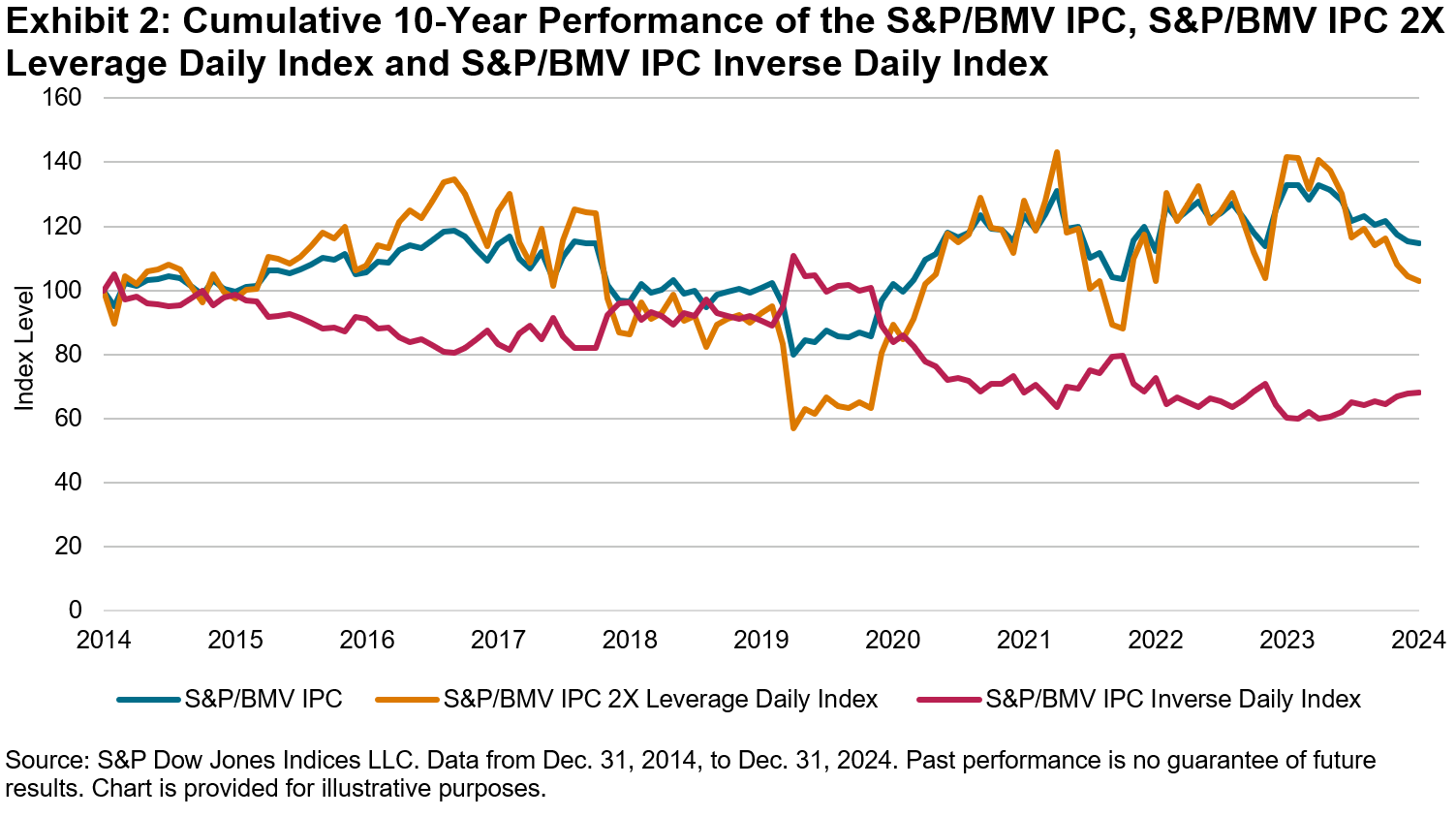
As shown in Exhibit 2, while the S&P/BMV IPC returned a cumulative 15% during this period, the S&P/BMV IPC 2X Leverage Daily Index underperformed the S&P/BMV IPC by more than 10%, and the S&P/BMV IPC Inverse Daily Index dropped around 30%. Due to the compounding effect and volatility, the return of the leveraged and inverse indices deviated significantly from their target at the end of this period

Case Study: The Hypothetical Performance of S&P/BMV IPC Leverage and Inverse Indices during High Volatility Periods

The below case study analyzes the performance of these indices during episodes of high volatility through a hypothetical index. A hypothetical index that assigns a 10% or 20% weight to the S&P/BMV Daily Leverage 2x or Inverse Indices during periods of high volatility and the broad Mexican equities market, as represented by the S&P/BMV IPC, are used for this purpose.

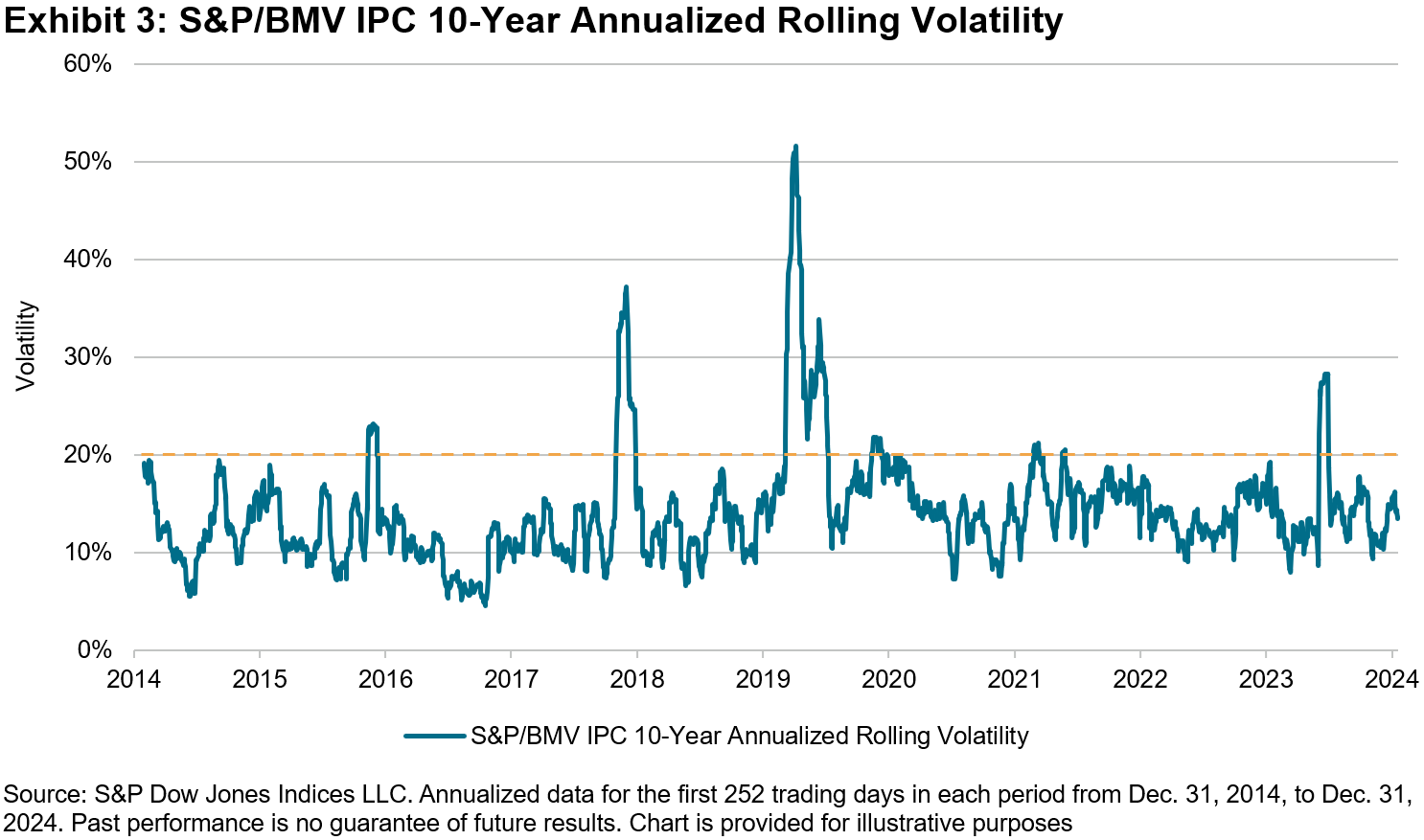
There were four short-term periods of sustained high volatility, defined as episodes where the annualized volatility of the S&P/BMV IPC was over 20% for more than 20 trading days (see Exhibit 3). For this analysis, we will focus on the second episode in 2018.

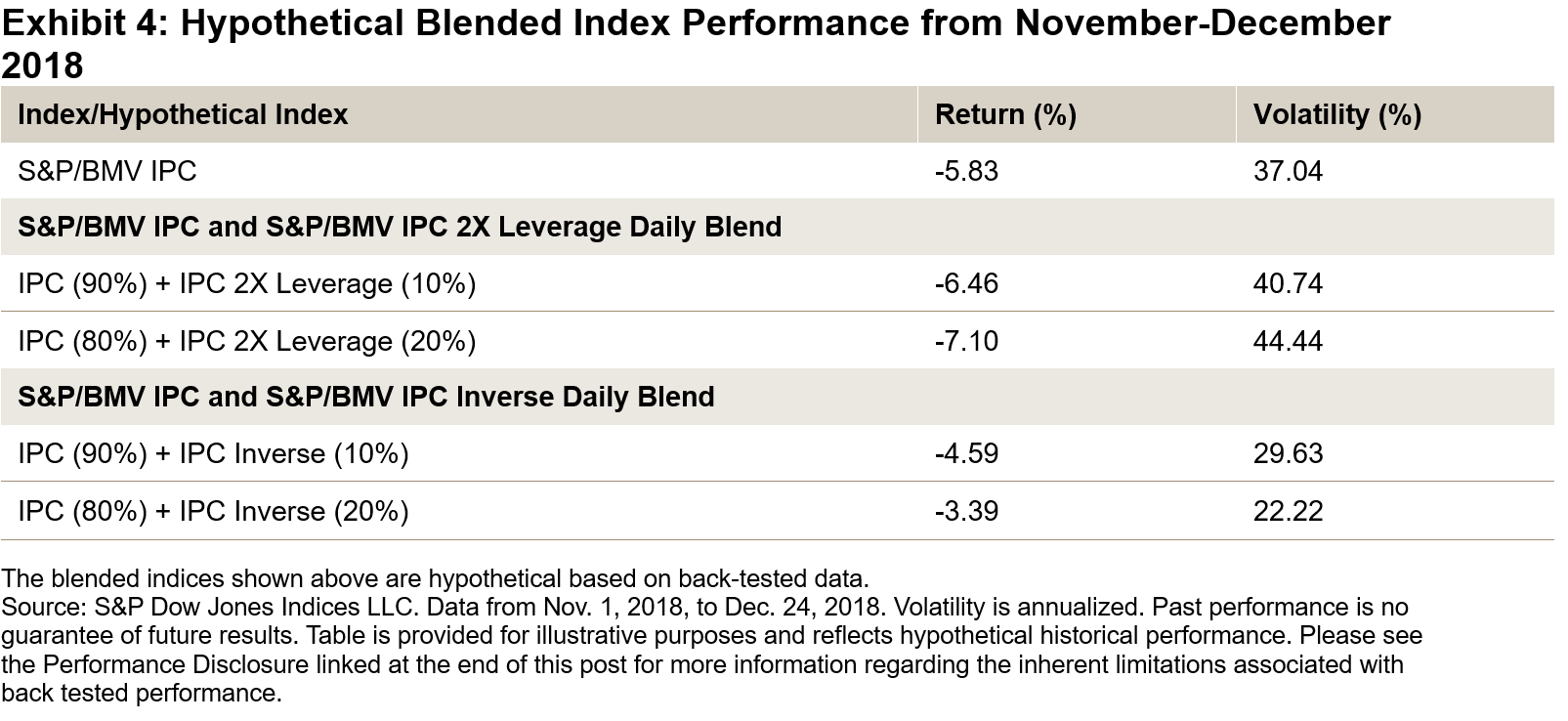
At the end of this second episode (from Nov. 1, 2018, to Dec. 24, 2018, around the inauguration of Andres Manuel Lopez Obrador as president of Mexico), the S&P/BMV IPC had negative performance of 5.83% for this two-month period. The hypothetical index that blends the S&P/BMV IPC and one of its leveraged/inverse indices demonstrates that even a small allocation to leveraged and inverse indices has the potential to significantly affect risk and return. For this same two-month period, the hedged blend would have demonstrated improved performance and reduced risk, while the leveraged blend would have amplified losses and volatility.

The case study above can help illustrate the hypothetical effects of leverage and compounding in the performance of leveraged and inverse indices. For the Mexican equity market, S&P Dow Jones Indices offers the S&P/BMV IPC 2X Leverage Daily and S&P/BMV IPC Inverse Daily Indices. However, due to the compounding effect and market volatility, the performance of these indices may deviate from their targets over longer periods.

1 For more information, please consult the S&P/BMV Indices methodology document.

The posts on this blog are opinions, not advice. Please read our Disclaimers.
The Factors Fueling the Rise of Indexing in Wealth Management

Contributor Image
Brandon Hass

Global Head of Client Solutions Group, Direct Indexing and Model Portfolios

S&P Dow Jones Indices

Recent activities indicate that indexing is on the rise in wealth management.

A previous blog introduced Cerulli Associates’ new whitepaper, which explores how index-based strategies are reshaping U.S. wealth management.1 Financial advisors with at least 10% of client assets invested in exchange-traded funds (ETFs) are allocating 46% of client assets to index-based strategies today, with expectations that this figure could hit 49% by 2026.2

But what’s driving this shift? In this blog, we examine the strategic factors behind indexing’s rise—including changes in advisors’ value propositions, the growth of asset allocation models and the rising use of direct indexing.

A New Advisor Playbook: From Performance to Planning

The wealth management landscape is evolving. Research from Cerulli Associates shows advisors are pivoting away from investment management as their core differentiator, with financial planning now taking center stage.

Why have advisors’ value propositions shifted? The research shows that clients have turned their focus to goals—such as funding retirement or college—rather than beating benchmarks. For example, 57% of affluent investors prioritized advisors who understand their needs, while 45% aimed to outperform the market.3

This shift aligns with a rise in index-based strategies, which have lower fees—an attractive feature for advisors focusing on holistic planning over outperforming benchmarks.

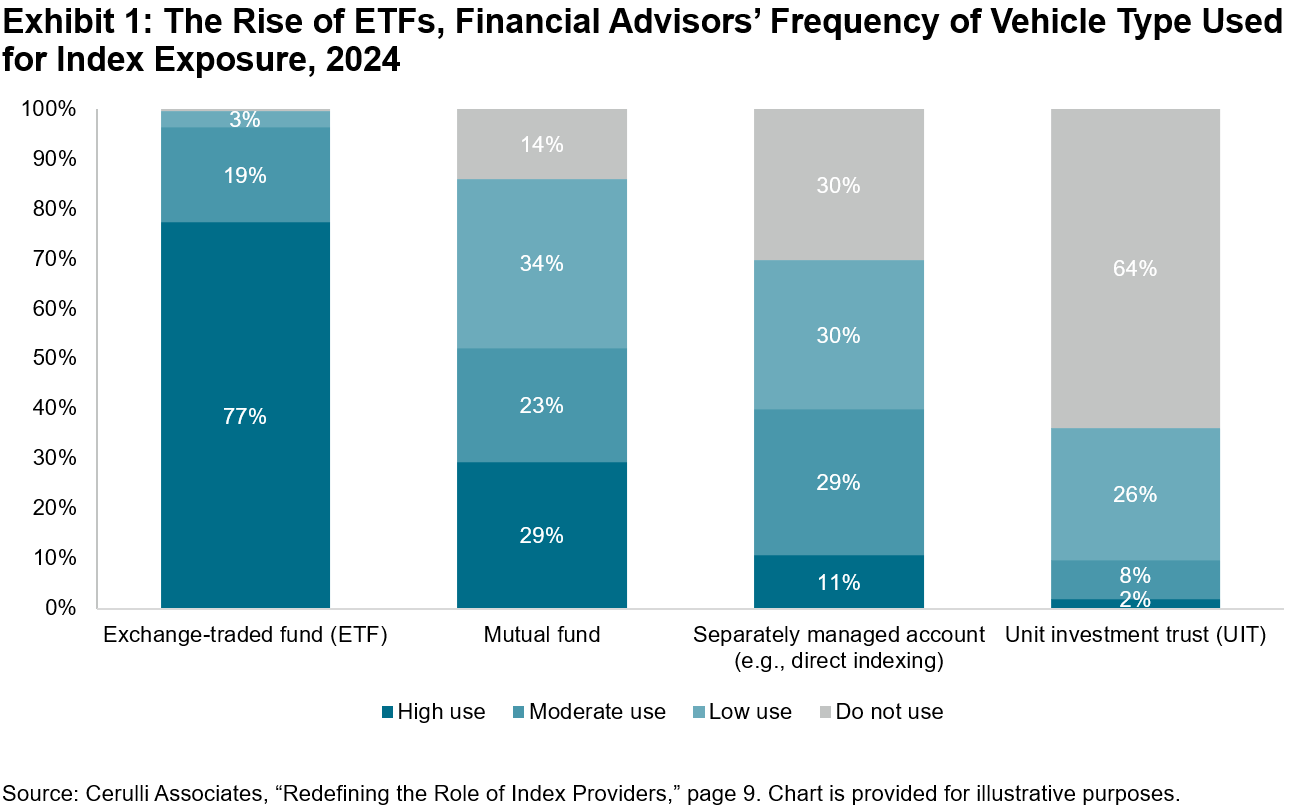
ETFs are the leading vehicles for index-based strategies, with over 75% of advisors reporting high usage, a factor contributing to indexing’s momentum (see Exhibit 1).

Asset Allocation Models: Outsourcing Meets Efficiency

Hand in hand with this trend is the rise of asset allocation model portfolios. These outsourced solutions, often built with index-based ETFs, are increasingly popular. Cerulli Associates pegged model assets at USD 2.1 trillion in 2023, projected to hit USD 2.9 trillion by year-end 2025.4

The growing use of asset allocation model portfolios is supported by a constant push/pull dynamic: wealth management home offices are actively promoting their adoption among advisors, while advisors themselves are increasingly attracted to the benefits these portfolios offer. For home offices, model portfolios can help create a more consistent client experience, reduce compliance risks and streamline decision-making, while advisors are drawn to the increased efficiency they offer, freeing up time for client-facing work.

Direct Indexing: Precision Meets Personalization

Direct indexing is becoming an important vehicle for how advisors build portfolios at the nexus of two trends in wealth management: high-net-worth clients’ demand for both increased efficiency and greater personalization.5

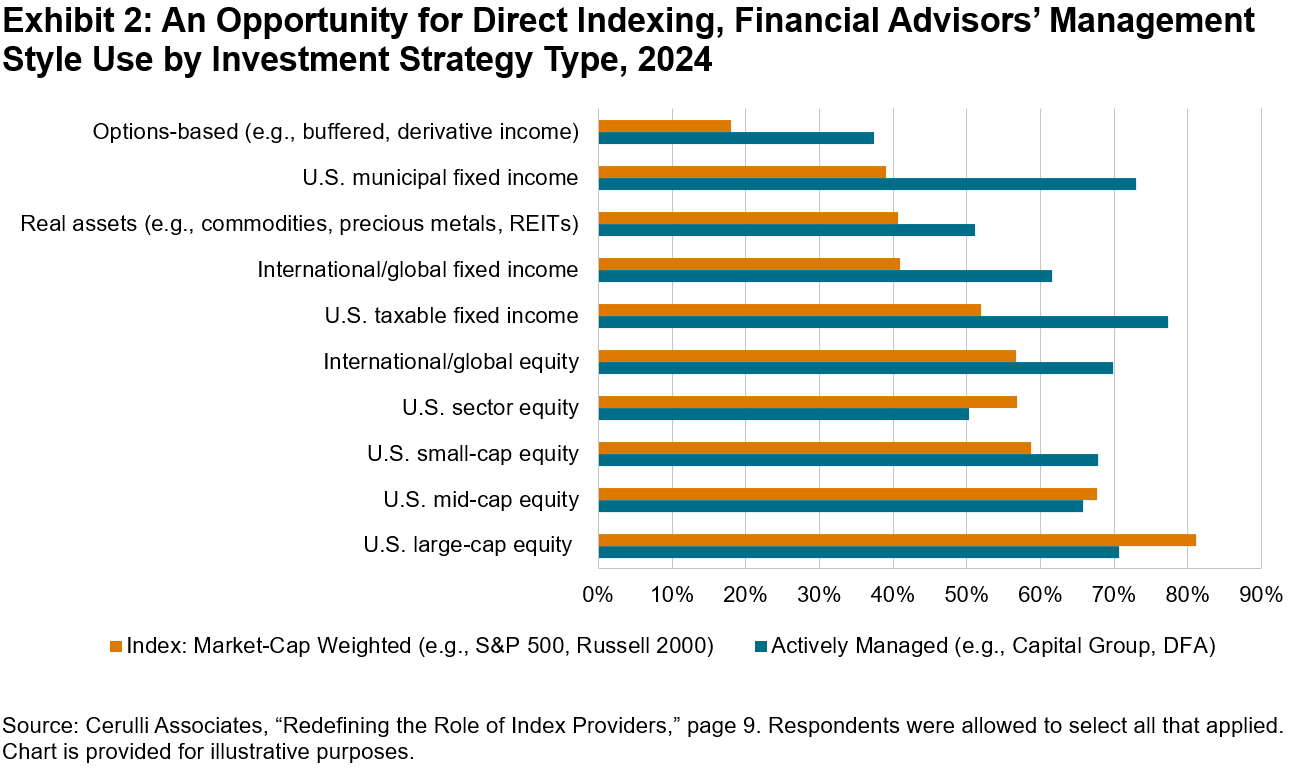
Advisors are increasingly using separately managed accounts (SMAs) to track indices while customizing for tax optimization or client preferences. Cerulli Associates has a positive outlook on the potential growth of direct indexing among the affluent and high-net-worth client segments, particularly in equity-based strategies. One reason is that 81% of advisors use index-based strategies for U.S. large-cap equity, where efficiency is prioritized, versus 52% for taxable fixed income, where active approaches are still implemented (see Exhibit 2).6

What’s Next?

These factors—planning over performance, model portfolios and direct indexing—aren’t just trends; they are fundamentally reshaping how advisors operate. Index providers have a role in these mega-trends, as they deliver the data, intellectual property and other tools designed to help asset managers and wealth managers track markets with precision and efficiency.

In upcoming blogs, we will explore how asset managers and wealth managers may further implement index providers’ solutions and services.

1 The Cerulli Associates whitepaper “Redefining the Role of Index Providers” was sponsored by S&P Dow Jones Indices.

2 Please see Executive Summary of Cerulli Associates’ “Redefining the Role of Index Providers.”

3 Please see page 4 of Cerulli Associates’ “Redefining the Role of Index Providers.”

4 Please see page 8 of Cerulli Associates’ “Redefining the Role of Index Providers.”

5 For more information on the growth of direct indexing, please read “Harnessing the Power of Direct Indexing.”

6 Please see page 10 of Cerulli Associates’ “Redefining the Role of Index Providers.”

The posts on this blog are opinions, not advice. Please read our Disclaimers.
Two Decades of Dividends: A Macro Look at S&P High Yield Dividend Aristocrats

What are the key takeaways from the first 20 years of the S&P High Yield Dividend Aristocrats? S&P DJI’s Rupert Watts and State Street Global Advisors’ Colin Ireland explore key lessons and potential applications for S&P HYDA in its 20th anniversary year.

The posts on this blog are opinions, not advice. Please read our Disclaimers.